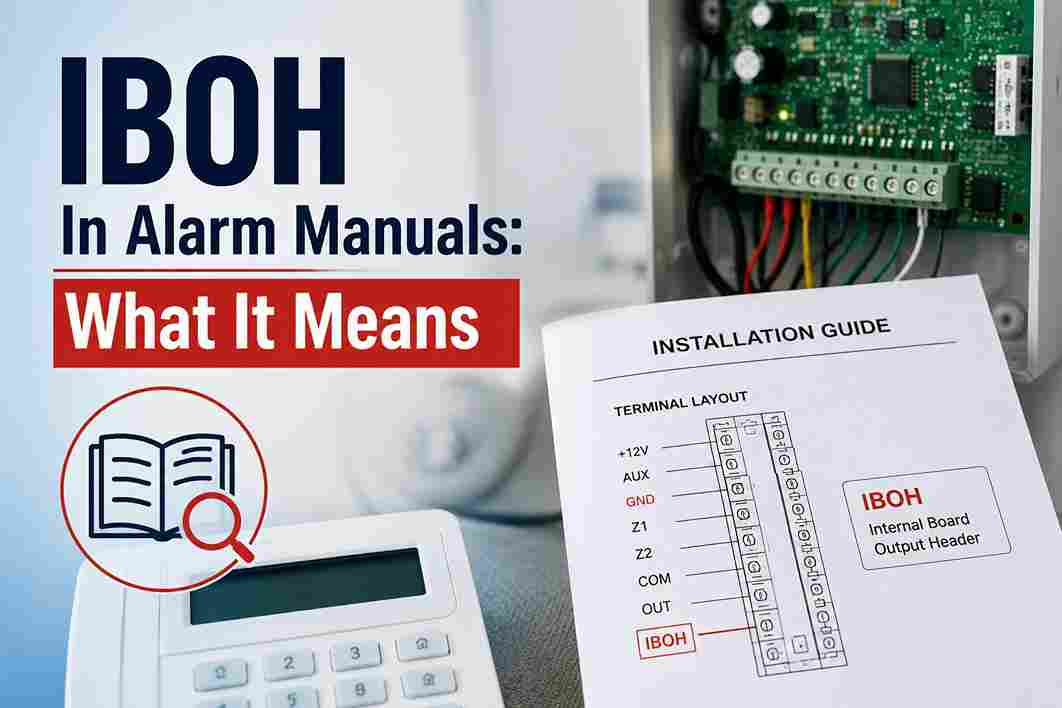
A homeowner downloads the installation guide for a new alarm panel and starts reviewing the wiring diagrams before installation. While reading through a terminal layout, they notice an unfamiliar abbreviation: iboh. The term appears multiple times throughout the documentation, yet there is no obvious explanation nearby. A quick internet search produces mixed answers. Some forum posts suggest one meaning, while others claim it refers to something entirely different.
Situations like this are common in the alarm and security industry. Manufacturers often use abbreviations, engineering codes, and installer shorthand throughout manuals, service documents, and configuration guides. These references help technicians work more efficiently, but they can confuse homeowners and DIY installers.
The challenge is that technical abbreviations are not always standardised across every manufacturer. In some cases, iboh may represent an internal reference, a hardware designation, a wiring point, or a documentation code specific to a product family.
This guide explains what iboh may represent, where it commonly appears, why manufacturers use technical abbreviations, and how to verify its meaning correctly before making installation or configuration changes.
What Does IBOH Mean?

One of the first things to understand is that there is no universally accepted alarm-industry definition for iboh that applies across every manufacturer and product line.
Unlike terms such as “EOL” (End of Line) or “N.C.” (Normally Closed), some abbreviations are proprietary or context-specific. Their meaning depends entirely on the documentation where they appear.
For example, a manufacturer may use an abbreviation to identify:
- A board connection.
- An internal hardware module.
- A terminal designation.
- A testing point.
- A programming reference.
- A subsystem identifier.
This is why reading surrounding documentation is essential before assuming a meaning.
Why Manufacturers Use Technical Abbreviations
Alarm documentation often contains large amounts of information within a limited space.
A single wiring diagram may include:
- 20–50 connection points.
- Multiple sensors.
- Expansion modules.
- Power connections.
- Communication pathways.
Using full descriptions everywhere would make diagrams difficult to read.
As a result, manufacturers rely on abbreviations to:
- Save space.
- Standardise engineering documents.
- Simplify technical drawings.
- Speed up installation workflows.
Professional installers become familiar with these conventions through training and experience.
Where IBOH Commonly Appears in Alarm Documentation

Wiring Diagrams
The most common place technicians encounter iboh references is inside wiring diagrams.
Wiring diagrams use abbreviations heavily because every connection point must fit within a limited amount of space.
For example, a security panel schematic may contain:
- Zone terminals.
- Auxiliary power outputs.
- Communication ports.
- Expansion board connections.
A reference, such as ibo,h, could appear next to a connection point or circuit path.
Whenever this happens, installers should consult the diagram legend before proceeding.
Installation Manuals
Installation manuals frequently reference abbreviations without explaining them repeatedly.
A manual may define a term once in an early section and then assume the reader understands it throughout the remaining pages.
Many homeowners miss these definitions because they jump directly to installation steps.
Technical Service Guides
Service guides are often written specifically for technicians.
Unlike consumer manuals, they frequently assume prior industry knowledge.
A troubleshooting guide might reference iboh while describing:
- Diagnostic procedures.
- Fault isolation.
- Component replacement.
- Hardware testing.
Alarm Panel Configuration Documents
Programming documents often contain technical references linked to hardware functions.
Installers may encounter abbreviations while configuring:
- Communication settings.
- Zone assignments.
- Expansion modules.
- Automation integrations.
Understanding the context is critical before making changes.
Understanding IBOH in Smart Security Systems

Traditional Alarm Systems
Traditional alarm systems relied heavily on printed manuals.
Installers frequently worked from:
- Wiring diagrams.
- Terminal charts.
- Technical reference sheets.
In these environments, abbreviations reduced document complexity and simplified field installations.
Modern Smart Alarm Platforms
Today’s smart alarm systems combine hardware and software. Many modern systems also integrate with connected devices like smart locks, allowing homeowners to manage security from a single app.
A modern installation may include:
- Mobile apps.
- Wireless sensors.
- Smart locks.
- Video doorbells.
- Cloud monitoring services.
Although technology has changed, manufacturers still use technical abbreviations within engineering documentation.
Hybrid Security Systems
Hybrid systems combine wired and wireless components.
These installations often generate the most complex documentation because multiple technologies must work together.
As a result, abbreviations become even more common.
Why Homeowners Often Get Confused by IBOH

Technical Manuals Are Written for Installers
Most alarm documentation is designed primarily for trained professionals.
Installers may have years of experience interpreting:
- Wiring schematics.
- Configuration charts.
- Diagnostic guides.
Homeowners often approach these documents without the same technical background.
Documentation Often Assumes Prior Knowledge
Manufacturers frequently assume readers already understand industry terminology.
For example, a guide may define an abbreviation once and never explain it again.
Readers who skip sections can easily miss important context.
Different Manufacturers Use Different Terminology
One company may use a specific abbreviation while another uses a completely different label for the same function.
This variation creates confusion when users compare manuals from different brands.
Common Situations Where You Might See IBOH

During New System Installation
A DIY installer reviewing terminal layouts may encounter unfamiliar abbreviations while connecting sensors and control panels.
This is often the first time homeowners notice technical references.
During Troubleshooting
Troubleshooting guides frequently contain abbreviated references because technicians need quick access to information.
An unfamiliar code can slow down diagnostics if its meaning is unclear.
During Sensor Replacement
Replacing sensors often requires consulting wiring diagrams.
This process frequently exposes users to technical labels they have never encountered before.
During System Expansion
Adding components such as:
- Additional keypads.
- Expansion boards.
- Smart home integrations.
- Wireless receivers.
As systems become more connected, they may also rely on automation platforms and plugins to support additional devices and custom integrations. May require reviewing advanced documentation where abbreviations appear more frequently.
How to Interpret IBOH Correctly

Check the Manual Glossary
The first step is always reviewing the glossary.
Many manuals include:
- Abbreviation lists.
- Definitions.
- Technical references.
- Wiring legends.
These sections often provide the answer immediately.
Review Wiring Legends
Legends explain symbols and abbreviations used throughout diagrams.
Never assume a term means the same thing across different products.
Compare Related Documentation
Manufacturers often publish multiple resources for the same system.
Useful documents include:
- Installation manuals.
- Programming guides.
- Service manuals.
- Technical bulletins.
Comparing them can reveal missing definitions.
Contact Manufacturer Support
If documentation remains unclear, contact support directly.
Provide:
- Product model number.
- Manual version.
- Page number.
- Exact reference location.
This approach often produces the fastest and most accurate answer.
Mistakes People Make When Encountering IBOH

One common mistake is guessing the meaning.
Assumptions can lead to:
- Incorrect wiring.
- Configuration errors.
- Device communication failures.
Another mistake is relying exclusively on forum discussions.
Online communities can be helpful, but information may be outdated or specific to a different product model.
Some users also ignore references entirely.
Unfortunately, overlooking a technical designation can lead to installation issues later.
Finally, making hardware changes without understanding terminology creates unnecessary risk.
Whenever uncertainty exists, verify first.
How Alarm Professionals Use Technical References Like IBOH

Installation Planning
Professional installers review documentation before arriving on-site.
Technical references help them:
- Identify connections.
- Plan wiring routes.
- Estimate installation time.
Troubleshooting
When diagnosing problems, technicians rely on documentation shortcuts to locate relevant information quickly.
Abbreviations help reduce search time.
System Maintenance
Maintenance procedures often reference specific hardware locations.
Experienced technicians use technical designations to work efficiently.
Compliance Documentation
Commercial security systems often require detailed records.
Technical references help maintain consistency across reports, inspections, and service histories.
Real-World Example: Solving an IBOH Documentation Confusion

A homeowner installed a hybrid alarm system with door sensors, motion detectors, and smart home integration.
During installation, they discovered IBOH referenced near a terminal block inside the control panel documentation.
Assuming it referred to a sensor input, they nearly connected the wiring incorrectly.
Instead of proceeding, they reviewed the service manual and located a glossary section.
The abbreviation was defined as a manufacturer-specific hardware reference unrelated to sensor wiring.
Because they verified the information first, they avoided a configuration mistake that could have required hours of troubleshooting.
This example highlights why context matters more than assumptions.
Best Practices When Reading Alarm Documentation
Use the following checklist whenever reviewing technical documents:
Documentation Review Checklist
- Read the introductory sections first.
- Review abbreviation lists.
- Examine wiring legends carefully.
- Verify model numbers match your equipment.
- Compare installation and service manuals.
- Highlight unfamiliar references.
- Avoid guessing terminology.
- Contact support when needed.
- Keep documentation organised.
- Record clarification notes for future maintenance.
Following these steps reduces installation errors and improves troubleshooting efficiency.
FAQ
What does IBOH stand for in alarm systems?
There is no single industry-wide definition. The meaning can vary depending on the manufacturer, product line, or documentation context.
Why does IBOH appear in security manuals?
Manufacturers often use abbreviations and technical references to simplify diagrams, manuals, and engineering documents.
Is IBOH important for homeowners?
It can be. Any unexplained reference may affect installation, configuration, or troubleshooting decisions.
Can I ignore IBOH references?
Ignoring technical references is not recommended. Always determine their purpose before making system changes.
Does every alarm manufacturer use IBOH?
No. Many abbreviations are manufacturer-specific and may not appear across all brands.
How do installers interpret technical abbreviations?
Professionals use manuals, legends, service guides, training materials, and manufacturer support resources.
Can misunderstanding IBOH cause installation problems?
Yes. Misinterpreting a technical reference can result in wiring mistakes, configuration errors, or troubleshooting difficulties.
Where can I verify the meaning of IBOH?
Start with the product manual, glossary, and wiring legend. If the answer remains unclear, contact the manufacturer directly.
Conclusion
Technical abbreviations are a normal part of alarm and smart security documentation. However, not every abbreviation has a universal industry definition. That is especially true for terms such as iboh, which may vary depending on the manufacturer and document being used.
The safest approach is to treat unfamiliar references as documentation clues rather than assumptions. By reviewing glossaries, checking wiring legends, comparing related manuals, and contacting support when necessary, homeowners and installers can avoid costly mistakes.
The next time you encounter iboh in a security system manual, focus on verifying its meaning within that specific product ecosystem. A few minutes of research can prevent hours of troubleshooting later.
If you’re working with advanced Vera-based automation systems, understanding how Luup Requests communicate with devices can also help when interpreting technical documentation and troubleshooting connected hardware.


Leave a Reply