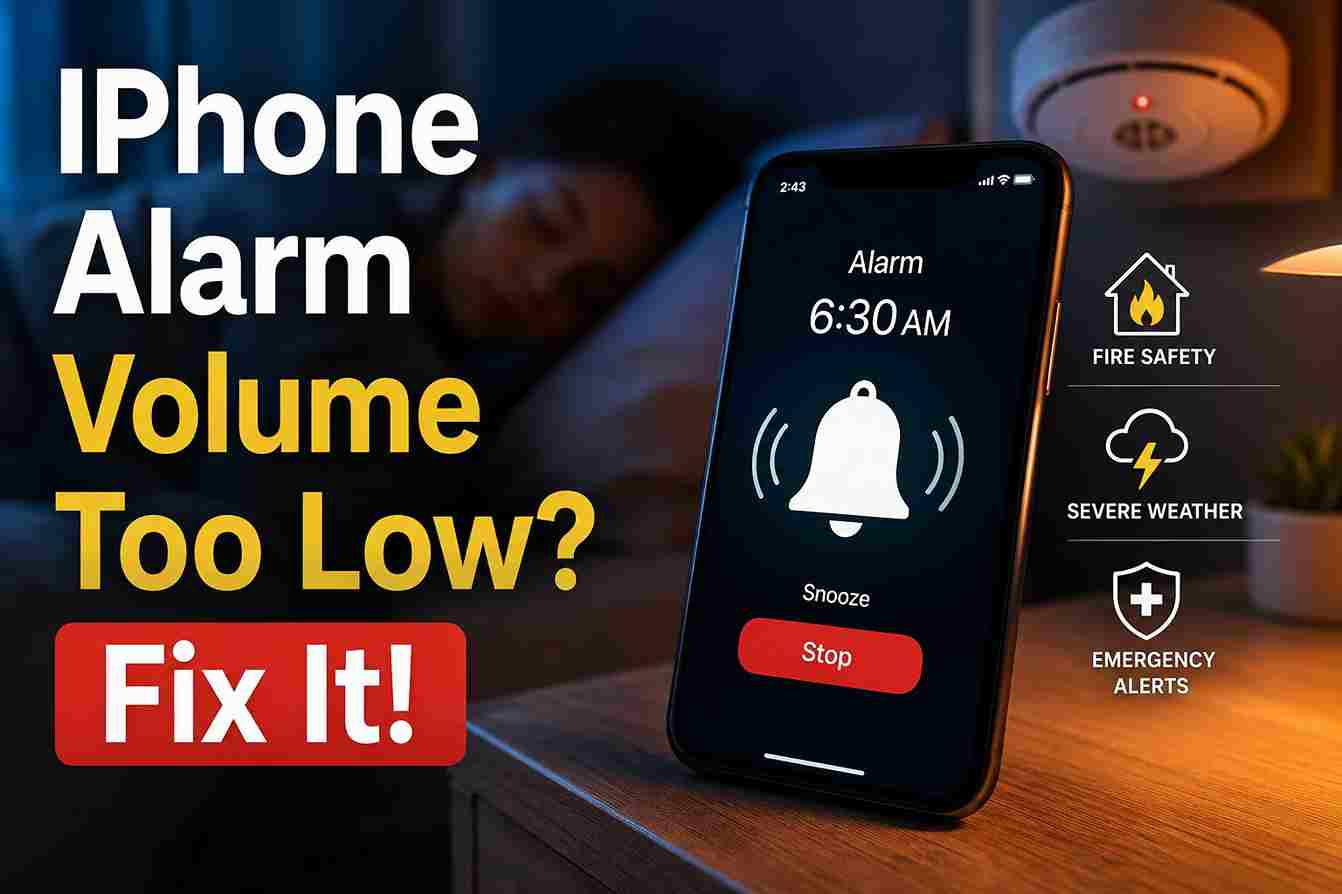
At 2:43 a.m., a homeowner is asleep upstairs when a smoke alarm activates in the kitchen. The alarm is loud enough to be heard nearby, but the homeowner had also set a backup iPhone alarm volume after noticing a battery warning on one of the smoke detectors earlier that evening. Unfortunately, the phone alarm never helped because the volume was accidentally reduced while watching videos before bed.
Situations like this are more common than many people realize. Small settings changes on a smartphone can have a direct impact on emergency preparedness. During a fire, medical incident, carbon monoxide event, or severe weather warning, every minute matters. A phone alarm is not a replacement for dedicated safety equipment, but it can serve as an important backup layer.
That is why understanding iPhone alarm volume settings is more than a convenience issue. Proper configuration can improve awareness during nighttime emergencies and reduce the chances of sleeping through an important alert.
Why iPhone Alarm Volume Plays a Role in Home Safety

Many people think of alarms only as wake-up tools. In reality, alarms often support broader household safety strategies.
Homeowners frequently use their phones to:
- Set backup reminders for smoke detector maintenance
- Schedule medication alerts
- Create emergency preparedness reminders
- Support elderly family members
- Act as a secondary warning system during storms
If the alarm is too quiet, those safeguards become less effective.
According to fire safety organizations, modern house fires can spread significantly faster than many older studies suggested due to synthetic furnishings and open floor plans. In some cases, occupants may have only a few minutes to react after a fire becomes established.
While dedicated smoke alarms remain the primary warning system, phone alarms can help reinforce emergency awareness.
How Sleeping Patterns Affect Emergency Response
Research on sleep behavior shows that people respond differently to sounds during deep sleep cycles. Factors such as age, fatigue, medications, and hearing ability can affect response times.
A quiet alarm that seems obvious during the day may be difficult to notice at 3 a.m.
For this reason, many emergency preparedness experts recommend testing alarms under realistic conditions rather than assuming they are loud enough.
Why Volume Mistakes Often Go Unnoticed
One reason homeowners overlook iPhone alarm volume settings is that the issue rarely becomes obvious until an alarm is missed.
Common causes include:
- Accidentally lowering alert volume
- Adjusting media volume instead of alarm volume
- Enabling settings that alter sound behavior
- Connecting Bluetooth devices
- Sharing devices with family members
A phone can appear to function normally while alarm loudness has been reduced significantly.
Understanding How iPhone Alarms Actually Work

Many users misunderstand the relationship between alarm sounds and other audio controls.
Ringtone Volume vs Media Volume
The most important distinction is between:
- Media volume
- Ringer and alert volume
Media volume controls:
- Videos
- Music
- Podcasts
- Games
Ringer and alert volume controls:
- Incoming calls
- Notification sounds
- Alarm loudness
This distinction matters because reducing video volume does not necessarily affect alarms. Likewise, changing alarm-related settings may not impact music playback.
Understanding this difference helps prevent accidental changes that weaken alarm effectiveness.
How iPhone Alarm Volume Is Controlled
On most modern iPhones, alarm loudness follows the “Ringer and Alerts” setting found in Sounds & Haptics.
This means your wake-up alarms, scheduled reminders, and many alert sounds depend on a setting that can sometimes be changed without much notice.
People often discover the problem only after oversleeping or missing an important reminder.
The Role of Sleep Schedule Alarms
Apple’s Sleep Schedule feature introduces another layer of alarm management.
These alarms may use different sounds and health-related scheduling options. While they generally rely on the same alert volume controls, users should test them separately to confirm expected behavior.
A bedtime alarm that sounds different may appear quieter even when volume levels remain unchanged.
How iPhone Alarm Volume Impacts Emergency Preparedness
A properly configured alarm can support a broader emergency readiness plan.
Fire Emergencies
Imagine a homeowner notices a smoke detector battery warning before bedtime.
As a temporary backup measure until replacement batteries are installed, they schedule a phone alarm to wake them during the night for a quick safety check.
If the alarm volume is too low, that additional precaution loses value.
Again, dedicated smoke alarms remain essential, but supplemental reminders can provide another layer of awareness.
Carbon Monoxide Incidents
Carbon monoxide presents a unique danger because it is invisible and odorless.
While certified carbon monoxide detectors are the primary defense, homeowners often schedule maintenance reminders and periodic testing alerts on their phones.
Reliable alarms help ensure those reminders are not missed.
Severe Weather Events
Thunderstorms, hurricanes, tornadoes, and flash floods often occur overnight.
Many people use alarm schedules alongside emergency alert systems to wake themselves before forecasted weather events.
A properly configured iPhone alarm volume setting can make those alerts easier to notice during deep sleep.
Medical Emergencies
Medication schedules frequently depend on smartphone alarms.
For households managing diabetes, heart conditions, or other chronic illnesses, a missed alarm can create complications.
Reliable alarm settings become especially important when reminders occur during early morning hours.
Common Mistakes That Reduce Alarm Reliability

Many alarm failures are caused by simple user errors rather than software problems.
Accidentally Lowering iPhone Alarm Volume
One of the most common mistakes occurs when users adjust side buttons without realizing alert settings are linked to them.
A small volume change can significantly reduce alarm loudness.
Checking settings periodically helps prevent surprises.
Assuming Silent Mode Mutes Alarms
Many users believe alarms will stop functioning when Silent Mode is enabled.
In reality, iPhone alarms generally continue to sound even when the phone is set to silent.
However, relying on assumptions is risky. Testing remains the safest approach.
Ignoring Bluetooth Connections
Bluetooth devices can occasionally create confusion about where sound is playing.
Users should verify alarm behavior after pairing:
- Wireless earbuds
- Bluetooth speakers
- Smart home audio systems
Never Testing Alarm Performance
People regularly test smoke detectors but rarely test smartphone alarms.
An alarm that worked perfectly six months ago may not be configured the same way today.
How to Set Your iPhone Alarm Volume Correctly
Configuring alarm settings takes only a few minutes.
Step 1: Open Settings
Unlock your iPhone and open the Settings app.
Step 2: Go to Sounds & Haptics
Locate the Sounds & Haptics section.
This area contains the primary alarm volume controls.
Step 3: Adjust Ringer and Alerts
Find the Ringer and Alerts slider.
Increase the level until it reaches a loud but comfortable setting.
Many homeowners prefer testing between 70% and 100% volume depending on sleeping conditions.
Step 4: Test an Alarm
Create an alarm scheduled for one or two minutes in the future.
Move across the room and evaluate whether the sound remains clearly audible.
Step 5: Verify Sleep Schedule Alarms
If you use Apple’s Sleep Schedule feature, create a test event and confirm volume levels.
Do not assume every alarm behaves identically.
Step 6: Check Focus Settings
Review:
- Sleep Focus
- Do Not Disturb
- Custom Focus Modes
Although alarms generally bypass these settings, testing ensures expected behavior.
Step 7: Re-Test Monthly
Alarm settings should become part of regular home maintenance.
Many homeowners already perform monthly checks for:
- Smoke alarms
- Carbon monoxide detectors
- Security cameras
Adding smartphone alarm testing to that routine takes less than a minute.
Troubleshooting Low Alarm Volume
If alarms still seem quiet:
- Restart the device
- Update iOS
- Change alarm sounds
- Disable attention-aware features if necessary
- Check connected Bluetooth devices
- Recreate the alarm from scratch
These steps resolve many common issues.
Using iPhone Alarm Volume with Smart Home Systems

Modern homes increasingly combine smartphones with connected devices.
Smart Speakers as Backup Alerts
Many homeowners use smart speakers as secondary alarm systems.
If a bedroom alarm is missed, another device elsewhere in the house may help increase awareness.
Multiple alert sources reduce the chance of sleeping through important notifications.
Security System Integration
Some smart home platforms allow homeowners to create routines that trigger lights, sounds, or notifications.
Examples include:
- Motion alerts
- Door activity notifications
- Garage door reminders
- Security camera warnings
Phone alarms can complement these systems as part of a broader safety strategy.
Apple Watch Considerations
An Apple Watch can provide vibration-based notifications that supplement alarm sounds.
This may benefit:
- Light sleepers
- Shift workers
- Individuals sharing bedrooms
However, watch notifications should not replace audible alarms entirely during emergencies.
Signs Your Alarm Settings Need Attention
Certain warning signs indicate potential issues.
Frequent Missed Alarms
Missing alarms occasionally may happen.
Missing them repeatedly suggests a configuration problem.
Alarms Sound Too Quiet
If family members hear your alarm before you do, alarm loudness may need adjustment.
Unexplained Volume Changes
Unexpected changes often result from accidental button presses or setting modifications.
Review settings regularly.
Shared Household Usage
Children or other family members may unintentionally alter sound settings.
This is especially common on shared devices.
Bluetooth Device Conflicts
If headphones or speakers frequently connect and disconnect, testing alarm behavior becomes even more important.
Creating a Backup Alarm Strategy for Home Emergencies

No single alert method should be trusted exclusively.
A layered approach offers better protection.
Consider combining:
- Smoke detectors
- Carbon monoxide detectors
- Emergency weather alerts
- Smartphone alarms
- Smart speaker alerts
- Security system notifications
Redundancy improves safety.
The goal is not to rely on one device but to create multiple opportunities to notice a problem.
FAQ
Why is my iPhone alarm so quiet?
The most common cause is a low Ringer and Alerts setting. Check Sounds & Haptics and increase the slider.
Does Focus Mode affect alarms?
Standard alarms typically bypass Focus Mode settings, but testing is recommended.
Do alarms ring when Silent Mode is enabled?
Yes. Most iPhone alarms continue to sound even when Silent Mode is active.
Can Bluetooth headphones affect alarms?
Bluetooth devices can occasionally affect audio behavior. Test alarms after pairing new devices.
Will an Apple Watch replace a phone alarm?
An Apple Watch can supplement alarms through vibrations, but it should not be considered a complete replacement.
How often should I test alarms?
Monthly testing is a practical schedule for most households.
Can software updates change alarm behavior?
Major updates occasionally modify settings or features. Testing after updates is a good habit.
What is the best alarm sound for emergencies?
Choose a loud, distinctive sound that immediately captures attention and is easy to recognize.
Should older adults use higher alarm volume levels?
Many older adults benefit from louder settings due to age-related hearing changes.
Can I use my phone instead of smoke alarms?
No. Smartphones should only serve as supplemental tools. Certified smoke alarms remain essential life-safety devices.
Final Thoughts
A missed alarm can be more than an inconvenience. During a fire, severe storm, medical situation, or household emergency, awareness and response time matter. Taking a few minutes to review alarm settings today can prevent problems later.
The good news is that checking iPhone alarm volume requires only a simple adjustment and a quick test. Combine that habit with properly maintained smoke detectors, carbon monoxide alarms, and smart home safety devices, and you’ll create a more reliable emergency preparedness plan for your household.

Leave a Reply