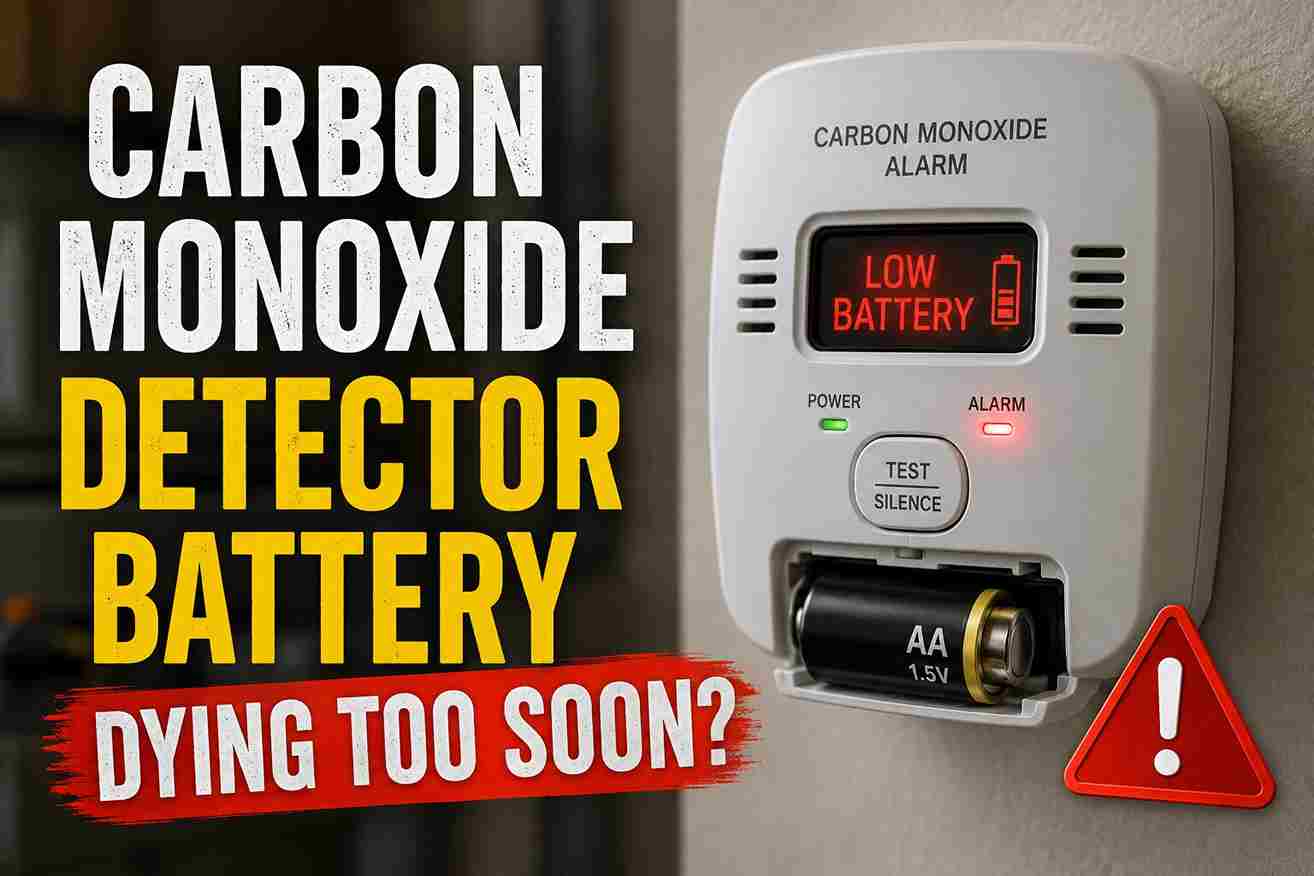
A homeowner in Minnesota noticed something unusual during a winter cold snap. The carbon monoxide detector battery alarm near the basement furnace began chirping even though the battery had been installed only 18 months earlier. After testing the unit, the detector itself worked perfectly. The problem was battery performance. Temperatures near the exterior wall had accelerated battery drain.
Stories like this are more common than many people realize. While manufacturers often provide estimated battery life ranges, real-world conditions rarely match laboratory environments. Humidity, temperature fluctuations, alarm frequency, battery quality, and detector design all influence how long a battery actually lasts.
Understanding the lifespan of a carbon monoxide detector battery is more than a maintenance concern. Carbon monoxide is an odorless, colorless gas responsible for hundreds of accidental poisoning deaths and thousands of emergency room visits each year. A detector with a weak battery may fail when it is needed most.
This guide examines real-world testing results, manufacturer recommendations, battery technologies, environmental factors, and practical maintenance strategies. Whether you own a battery-powered detector or a hardwired unit with battery backup, knowing what affects battery longevity can help ensure reliable protection for your household.
Understanding the Role of a Carbon Monoxide Detector Battery

A carbon monoxide detector continuously monitors indoor air for dangerous levels of carbon monoxide gas. To perform this function effectively, it requires a reliable power source.
The battery serves as the detector’s energy supply during monitoring, testing, and alarm activation.
Why Detector Batteries Matter
Unlike smoke from a fire, carbon monoxide cannot be seen or smelled. Occupants often remain unaware of exposure until symptoms develop.
A functioning battery ensures the detector can:
- Monitor air quality continuously
- Trigger alarms when danger is detected
- Operate during power outages
- Perform internal self-checks
- Maintain sensor performance
A dead battery removes a critical layer of home safety.
How Modern Detectors Use Power
Modern detectors consume very little power during routine monitoring. However, power usage increases when:
- Alarm sirens activate
- Self-testing functions run
- Wireless connectivity features operate
- Digital displays remain active
- Smart-home integrations communicate
These functions affect how long a battery lasts under real-world conditions.
Carbon Monoxide Detector Battery Lifespan by Battery Type

Not all batteries perform equally.
The expected lifespan of a carbon monoxide detector battery depends heavily on the battery chemistry used.
AA Alkaline Batteries
Alkaline batteries remain common in many detectors.
Typical lifespan:
| Usage Condition | Average Lifespan |
| Ideal conditions | 12-18 months |
| Average household | 9-15 months |
| High humidity or temperature fluctuations | 6-12 months |
Real-world testing often shows shorter life than package claims.
Lithium Batteries
Lithium batteries generally outperform alkaline alternatives.
Benefits include:
- Longer lifespan
- Better cold-weather performance
- Lower self-discharge rate
- Greater reliability
Typical lifespan:
| Battery Type | Average Lifespan |
| Standard lithium | 3-5 years |
| Sealed lithium units | Up to 10 years |
Many newer detectors incorporate sealed lithium batteries specifically designed to last the life of the detector.
Factors That Affect Carbon Monoxide Detector Battery Life

Many homeowners assume all batteries should last exactly as advertised.
In reality, several variables influence performance.
Frequency of Alarm Activations
Every alarm event consumes power.
Even false alarms can significantly reduce battery life.
Common causes include:
- Poor detector placement
- Temporary gas appliance issues
- Steam interference
- Dust accumulation
Frequent activations accelerate battery depletion.
Detector Features
Advanced detectors typically require more energy.
Examples include:
- Digital displays
- Voice alerts
- Wi-Fi connectivity
- Mobile app integration
- Multi-sensor monitoring
These features improve convenience but increase power demands.
Carbon Monoxide Detector Battery and Detector Age

Battery life often decreases as detectors age.
This surprises many homeowners.
Aging Electronics Require More Power
Internal components gradually become less efficient.
As detectors approach their end-of-life period, they may:
- Draw more current
- Generate battery warnings sooner
- Experience reduced performance consistency
This effect is particularly noticeable after seven years of operation.
Sensor Degradation and Battery Consumption
Carbon monoxide sensors degrade naturally.
Many detectors are designed to be replaced after:
- 5 years
- 7 years
- 10 years
depending on manufacturer specifications.
Installing fresh batteries in an expired detector does not restore sensor accuracy.
Recommended Replacement Schedule for Carbon Monoxide Detector Battery
Waiting until the battery dies is not the safest approach.
Proactive replacement reduces risk.
Annual Battery Replacement Rule
Many safety organizations recommend replacing batteries annually.
A common strategy is replacement during:
- Daylight Saving Time changes
- New Year’s maintenance checks
- Annual home inspections
This simple habit minimizes unexpected failures.
Signs the Battery Needs Immediate Replacement
Replace batteries immediately if you notice:
- Chirping sounds
- Low-battery indicators
- Weak display brightness
- Delayed test responses
- Intermittent warning signals
Ignoring these signs can leave the detector unable to function properly.
How to Test a Carbon Monoxide Detector Battery Correctly
Many people press the test button and assume everything is working.
The process should be more thorough.
Monthly Testing Procedure
Follow these steps:
- Press and hold the test button.
- Confirm alarm activation.
- Verify display operation.
- Check indicator lights.
- Listen for full-volume siren output.
Record testing dates for future reference.
Battery Inspection Checklist
During inspections, check for:
- Corrosion
- Leakage
- Loose connections
- Dust accumulation
- Expiration dates
Small issues often become major problems if ignored.
Common Mistakes That Shorten Carbon Monoxide Detector Battery Life
Many premature battery failures are caused by user behavior rather than product defects.
Using Low-Quality Batteries
Cheap batteries often provide inconsistent voltage output.
Problems may include:
- Short lifespan
- Leakage
- Reduced cold-weather performance
- Unexpected failure
Quality batteries typically deliver better long-term value.
Mixing Old and New Batteries
This remains one of the most common mistakes.
Mixing batteries can:
- Cause uneven discharge
- Reduce overall lifespan
- Increase leakage risk
- Affect detector reliability
Always replace all batteries simultaneously.
Carbon Monoxide Detector Battery Maintenance Best Practices

Routine maintenance improves both battery longevity and detector performance.
Keep Detectors Clean
Dust can interfere with electronics.
Recommended cleaning schedule:
- Monthly visual inspection
- Quarterly vacuuming
- Annual deep cleaning
Use a soft brush attachment to remove debris.
Monitor Environmental Conditions
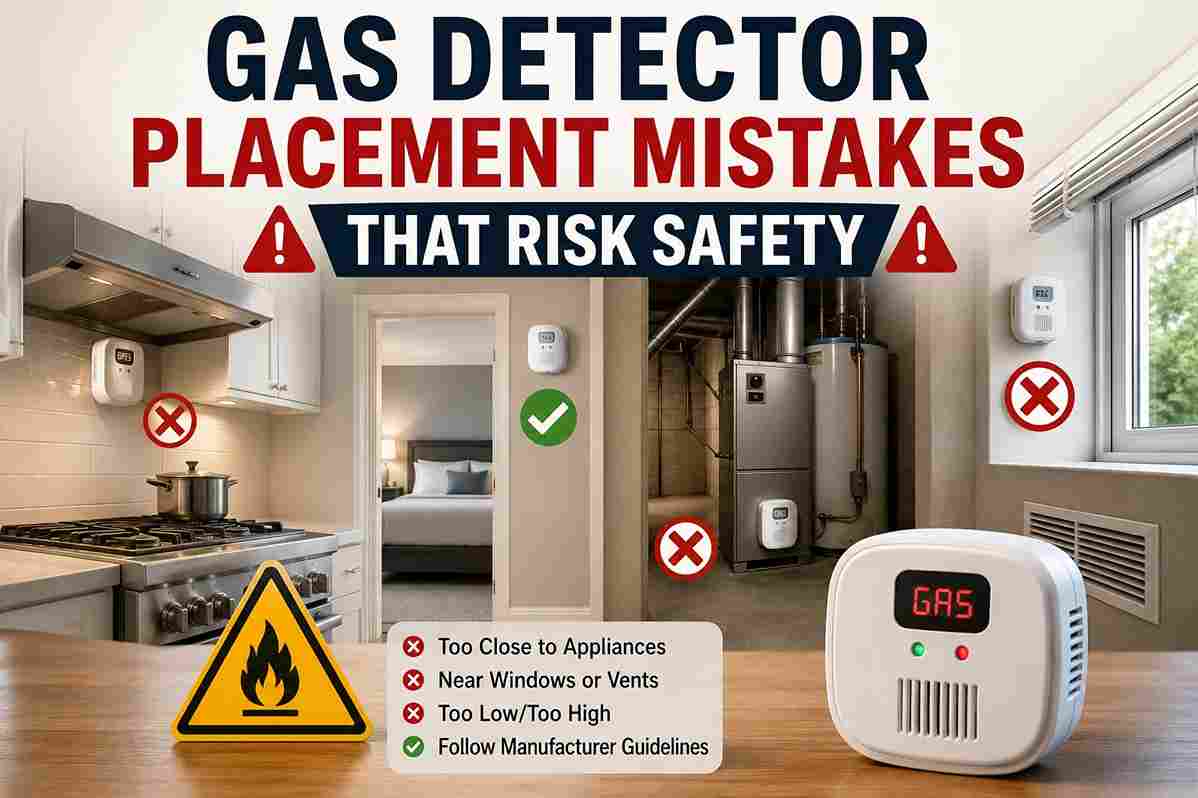
Avoid placing detectors near:
- Direct sunlight
- HVAC vents
- Excessive humidity sources
- Extreme heat zones
Stable conditions generally improve battery performance.
Comparing Battery-Powered and Hardwired Detectors

Homeowners often ask which option offers better reliability.
The answer depends on the installation environment.
Battery-Powered Units
Advantages:
- Easy installation
- No electrical wiring required
- Flexible placement
- Lower initial cost
Disadvantages:
- Regular battery replacement
- Greater maintenance requirements
Hardwired Units with Backup Batteries
Advantages:
- Continuous household power
- Backup protection during outages
- Reduced battery dependence
Disadvantages:
- More expensive installation
- Backup batteries still require monitoring
Both systems require periodic maintenance.
Real-World Homeowner Experiences with Carbon Monoxide Detector Battery Longevity

Field experiences provide valuable insights beyond laboratory testing.
Example: Urban Apartment Installation
A battery-powered detector installed in a climate-controlled apartment achieved:
- 17 months using premium alkaline batteries
- 48 months using lithium batteries
Minimal temperature variation contributed to longer lifespan.
Example: Detached Garage Installation
A detector exposed to seasonal temperature swings showed:
- Alkaline battery replacement every 8-10 months
- Lithium battery replacement every 24-36 months
Environmental stress significantly affected results.
Signs Your Detector Needs Replacement Instead of a New Battery

Sometimes replacing the battery does not solve the problem.
Watch for:
- Repeated false alarms
- Persistent warning signals
- Expired sensor dates
- Failure during testing
- Display malfunctions
These signs often indicate detector replacement is necessary.
Battery Replacement Schedule by Household Type

Different environments create different maintenance demands.
| Household Type | Suggested Battery Check | Suggested Replacement |
| Apartment | Monthly | Annually |
| Single-family home | Monthly | Annually |
| Vacation property | Before each visit | Every 6-12 months |
| Extreme climate region | Monthly | Every 6-12 months |
| Hardwired detector backup battery | Monthly | Every 1-2 years |
Adjust schedules based on actual usage and environmental conditions.
Frequently Asked Questions
How long does a carbon monoxide detector battery usually last?
Most alkaline batteries last between 9 and 18 months. Lithium batteries often last 3 to 5 years, while sealed lithium models can operate for up to 10 years.
Should I replace batteries every year even if they still work?
Yes. Annual replacement provides an extra margin of safety and reduces the risk of unexpected failure.
Why is my detector chirping after installing a new battery?
Possible causes include incorrect installation, expired detectors, dirty contacts, or internal component failure.
Can cold weather shorten battery life?
Yes. Low temperatures reduce battery efficiency and can significantly shorten operational lifespan.
Are lithium batteries worth the extra cost?
In most cases, yes. They generally provide longer service life and better performance in challenging environments.
How often should I test my detector?
Monthly testing is widely recommended by safety organizations and manufacturers.
Can a detector work during a power outage?
Battery-powered units continue operating normally. Hardwired models rely on backup batteries during outages.
What happens if the battery dies completely?
The detector loses its ability to monitor carbon monoxide levels, leaving occupants unprotected.
Do smart detectors use batteries faster?
Smart features such as Wi-Fi connectivity and mobile notifications can increase power consumption.
When should I replace the entire detector?
Most detectors should be replaced every 5 to 10 years depending on the sensor type and manufacturer recommendations.
Final Thoughts
Real-world testing consistently shows that battery life depends on far more than manufacturer estimates. Temperature extremes, humidity, detector age, battery quality, and alarm frequency all influence performance. While some alkaline batteries may last more than a year under ideal conditions, others can require replacement much sooner in demanding environments.
The most effective strategy is simple: test your detector monthly, replace batteries proactively, monitor warning signals, and replace aging detectors before sensor performance declines. Treating the carbon monoxide detector battery as a routine safety item rather than an afterthought helps ensure your home remains protected around the clock. A few minutes of maintenance each year can make the difference between a functioning warning system and a silent detector when it matters most.


Leave a Reply