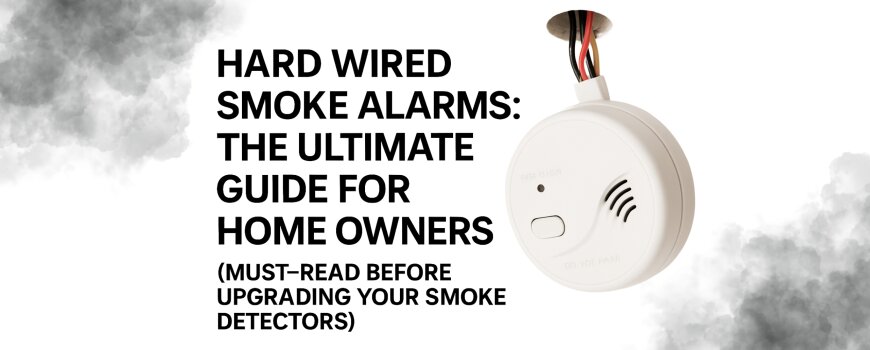
At 2:17 a.m., a family in Ohio woke up to a smoke alarm triggered by an electrical fire inside a laundry room wall. The alarm that sounded first wasn’t the hardwired smoke detector closest to the fire. It was the interconnected alarm upstairs that alerted everyone simultaneously. According to fire safety research, the risk of dying in a home fire is significantly higher when working smoke alarms are absent or not functioning properly.
Yet many homeowners make the same mistake: they install smoke alarms once and assume they’re protected for years. Some forget battery replacements. Others rely on outdated devices beyond their recommended lifespan. Choosing between a battery-powered unit and a hardwired smoke detector can influence how quickly occupants are warned during an emergency.
The decision is not simply about convenience. It affects reliability, maintenance, installation costs, and the level of protection throughout the home. Understanding how both systems work makes it easier to select the right option for your property and budget.
Understanding the Basics of Smoke Detection

Before comparing technologies, it helps to understand what smoke detectors are designed to do.
Smoke alarms detect smoke particles and provide an audible warning before a fire spreads. Most residential units use either ionization sensing, photoelectric sensing, or a combination of both.
Modern fire safety experts often recommend dual-sensor alarms because they respond to a wider range of fire types.
The biggest distinction between residential smoke alarms is not the sensor itself but the power source.
What Is a Hardwired Smoke Detector?
A hardwired smoke detector connects directly to a home’s electrical system. These alarms receive continuous power from household wiring and typically include a backup battery.
Because they remain connected to electrical power, they reduce the risk of becoming inactive due to a forgotten battery replacement.
Many newer systems also allow alarms to communicate with one another. When one alarm detects smoke, every connected unit sounds simultaneously.
What Is a Battery-Powered Smoke Detector?
Battery-operated smoke detectors run entirely on replaceable or sealed batteries.
They are commonly used in apartments, older homes, rental properties, and locations where running electrical wiring would be difficult or expensive.
Installation is generally straightforward. Most units can be mounted in minutes using basic tools.
However, the device depends entirely on battery health. If the battery dies, protection disappears unless it is replaced promptly.
Hardwired Smoke Detector vs Battery Smoke Detector: Key Differences

Choosing between the two systems requires evaluating several factors beyond initial cost.
| Feature | Hardwired Smoke Detector | Battery Smoke Detector |
| Power Source | Household electrical wiring with backup battery | Battery only |
| Installation | Professional or skilled DIY installation | Simple DIY installation |
| Maintenance | Periodic battery backup replacement | Frequent battery checks |
| Reliability | Continuous power supply | Depends on battery condition |
| Interconnectivity | Common and often standard | Limited unless wireless models are used |
| Initial Cost | Higher | Lower |
| Long-Term Cost | Generally lower over time | Higher battery replacement expenses |
| Code Compliance | Often required in newer homes | Accepted in many older homes |
| Power Outage Protection | Backup battery maintains operation | Continues operating normally |
| Best For | Large homes and new construction | Apartments and older homes |
How a Hardwired Smoke Detector Improves Reliability

One reason many building professionals prefer a hardwired smoke detector is reliability.
Human error remains one of the biggest weaknesses in residential fire protection. People remove batteries after nuisance alarms, forget annual replacements, or ignore low-battery warnings.
Hardwired systems reduce these risks because primary power comes from the home’s electrical circuit.
Reduced Risk of Power Failure
A modern hardwired smoke detector usually includes a backup battery.
If electrical service is interrupted during a storm or outage, the alarm continues functioning. Homeowners gain two layers of protection instead of one.
Better Interconnected Protection
Interconnected alarms can dramatically improve evacuation times.
Imagine a fire starting in a basement while family members sleep on the second floor. A standalone detector may only sound in the basement. Interconnected alarms activate throughout the home.
This feature is one reason building codes increasingly favor hardwired systems in newly constructed houses.
Consistent Performance Over Time
Because electrical power remains constant, a hardwired smoke detector avoids many performance issues associated with weak batteries.
Homeowners still need testing and maintenance, but the likelihood of a completely inactive detector is lower.
Advantages of Battery-Powered Smoke Detectors

Battery-powered units remain popular for several practical reasons.
Not every home can accommodate new wiring. Budget limitations also influence purchasing decisions.
Easy Installation
Most battery alarms require only mounting hardware and batteries.
This simplicity makes them ideal for renters and homeowners seeking immediate protection without electrical work.
Lower Upfront Costs
A basic battery-powered smoke alarm may cost between $15 and $40.
By comparison, a hardwired smoke detector installation can involve labor, wiring materials, and electrical modifications.
Flexible Placement
Battery-powered models can be installed almost anywhere recommended by fire safety guidelines.
No wiring means fewer placement restrictions.
Installation Costs: What Homeowners Can Expect

Cost often becomes the deciding factor.
Battery-powered alarms are usually less expensive initially. A homeowner can outfit a small apartment for under $100.
Hardwired systems require greater investment.
Typical Battery Detector Costs
- Smoke alarm unit: $15–$60
- Installation: Often DIY
- Maintenance: Ongoing battery replacements
Typical Hardwired Smoke Detector Costs
A hardwired smoke detector generally costs between $25 and $80 per unit.
Professional installation may add $100 to $250 per detector depending on wiring accessibility and local labor rates.
New construction projects typically see lower installation costs because wiring is included during the building process.
Maintenance Requirements and Long-Term Ownership Costs

Many buyers focus on purchase price while overlooking lifetime costs.
Smoke alarms typically require replacement every 10 years regardless of power source.
Battery Replacement Schedule
- Traditional battery alarms often require annual battery changes.
- Some modern units use sealed lithium batteries designed to last up to 10 years.
- Even then, regular testing remains essential.
Hardwired System Maintenance
- A hardwired smoke detector still contains a backup battery.
- Most manufacturers recommend replacing backup batteries periodically according to product guidelines.
- Routine testing should occur monthly.
- Cleaning dust from sensors can also help reduce false alarms.
Reliability During Power Outages

A common misconception is that hardwired alarms stop functioning when electricity fails.
That is not how modern systems work.
Most hardwired units include backup batteries specifically for outage situations.
Meanwhile, battery-powered alarms remain unaffected because they operate independently of household electricity.
Which System Performs Better During an Outage?
If both devices are properly maintained, performance during outages is comparable.
The difference emerges outside outage situations.
A neglected battery-only alarm is more likely to fail due to battery depletion than a properly maintained hardwired smoke detector.
False Alarms and Everyday Performance

Nobody enjoys being startled by a smoke alarm during dinner.
False alarms often occur near kitchens, bathrooms, or dusty environments.
Power source alone does not determine false alarm frequency.
Sensor technology plays a larger role.
Photoelectric Sensors
- These alarms excel at detecting smoldering fires.
- They are also less likely to trigger from cooking smoke.
Ionization Sensors
- These alarms respond quickly to fast-flaming fires.
- However, they can be more sensitive to cooking-related disturbances.
Whether choosing a battery model or a hardwired smoke detector, selecting quality sensor technology matters.
Building Codes and Insurance Considerations

Building regulations increasingly favor interconnected alarm systems.
Many jurisdictions require hardwired interconnected alarms in:
- Newly built homes
- Major renovations
- Home additions
- Certain multifamily properties
A hardwired smoke detector often helps satisfy these requirements.
Insurance companies may also view updated fire protection systems positively.
While discounts vary, some insurers offer incentives for enhanced safety features, including monitored or interconnected alarm systems.
Smart Home Integration and Modern Features

Smoke alarms have evolved considerably.
Today’s systems can connect to smartphones, home automation platforms, and voice assistants.
Smart Notifications
Users receive alerts even when away from home.
This can be valuable for frequent travelers and landlords.
Remote Monitoring
Some smart systems notify homeowners when batteries are low or maintenance is required.
Integration With Other Devices
A modern hardwired smoke detector may integrate with:
- Smart lighting
- Security systems
- Smart locks
- Monitoring services
These capabilities create a more responsive safety ecosystem.
Which Smoke Detector Is Right for Your Home?

Different homes benefit from different solutions.
Small Apartments
Battery-powered alarms often provide an affordable and practical solution.
Installation is simple, and wiring modifications are unnecessary.
Single-Family Homes
A hardwired smoke detector system with interconnected alarms offers stronger whole-home protection.
Families sleeping in separate rooms benefit from simultaneous alerts.
Large Multi-Story Homes
Interconnected hardwired systems are usually the strongest option.
A fire on one floor immediately triggers alarms throughout the house.
Rental Properties
Property owners should consider local regulations first.
Battery-powered alarms may satisfy requirements in some locations, while others require interconnected systems.
New Construction Homes
A hardwired smoke detector setup is generally the preferred choice because wiring can be installed during construction at relatively low cost.
Older Homes
Wireless interconnected battery systems may provide an excellent compromise when rewiring is impractical.
Next Steps Before Buying a Smoke Detector

- Review local building code requirements.
- Count bedrooms and sleeping areas.
- Identify the number of floors requiring protection.
- Determine whether existing wiring is available.
- Decide if interconnected alarms are necessary.
- Compare installation costs with long-term maintenance expenses.
- Choose photoelectric or dual-sensor technology.
- Consider smart monitoring features.
- Schedule monthly alarm testing.
- Mark the detector replacement date on a calendar.
Frequently Asked Questions
Are hardwired smoke detectors safer than battery-powered models?
Both can provide excellent protection. However, interconnected hardwired systems often offer greater reliability and whole-home notification.
Do hardwired smoke detectors work during power outages?
Yes. Most modern hardwired alarms include backup batteries.
How often should smoke detector batteries be replaced?
Traditional batteries are commonly replaced annually. Follow manufacturer recommendations.
Can I replace a battery detector with a hardwired unit?
Yes, although electrical wiring may need to be installed.
Are interconnected alarms worth the extra cost?
For larger homes, interconnected alarms provide faster notification throughout the property.
How long do smoke detectors last?
Most manufacturers recommend replacement after 10 years.
What do building codes usually require?
Requirements vary by location, but newer homes frequently require interconnected smoke alarms.
Are smart smoke detectors better?
They can provide additional convenience through mobile alerts and remote monitoring.
Which detector type is best for renters?
Battery-powered models are often easier to install and remove when moving.
Should smoke alarms be tested regularly?
Yes. Monthly testing helps confirm proper operation.
Final Verdict: Which Option Provides Better Protection?
The answer depends partly on the home, but reliability remains the deciding factor.
For new construction, larger homes, and households seeking maximum coverage, a hardwired smoke detector system with interconnected alarms generally delivers the strongest level of protection. Continuous electrical power, backup batteries, and whole-home alerts create multiple layers of safety.
Battery-powered alarms still serve an important role. They are affordable, easy to install, and highly effective when properly maintained. For apartments, older homes, and rental properties, they often represent a practical solution.
The most important factor is not whether an alarm is hardwired or battery-powered. It is whether the device is working, tested regularly, and replaced when it reaches the end of its service life. A well-maintained hardwired smoke detector or battery-powered alarm will always outperform a neglected system, regardless of technology.



Leave a Reply