
A surprising number of house fires don’t become deadly because flames spread too quickly. Instead, people lose valuable escape time because smoke alarms are installed in the wrong locations. According to fire safety organizations, properly placed smoke detector installation alarms can cut the risk of dying in a home fire by more than half. Yet many homeowners unknowingly create blind spots by mounting alarms too close to kitchens, skipping hallways, or forgetting basement coverage altogether.
The reality is simple: even the best alarm cannot protect you if smoke never reaches it in time. Effective smoke detector installation is not just about attaching a device to a ceiling. It involves understanding how smoke travels, which areas of a home face the highest risk, and where detection can happen early enough to make a difference.
This guide explains the placement mistakes homeowners make most often, the locations recommended by fire safety experts, and the practical steps you can take to improve protection throughout your home.
Why Proper Smoke Detector Placement Matters

Smoke moves differently than many homeowners expect. During a fire, hot smoke rises and spreads along ceilings before moving into hallways, stairwells, and adjacent rooms. An alarm installed only a few feet away from the ideal location can delay detection by critical seconds or even minutes.
Organizations such as the National Fire Protection Association (NFPA) recommend smoke alarms inside every sleeping room, outside each sleeping area, and on every level of a home. These recommendations are based on decades of fire incident data rather than general safety assumptions.
Poor placement creates three major risks:
- Delayed warning during a fire
- Increased chance of occupants becoming trapped
- Greater property damage due to slower response
A well-planned alarm network helps detect smoke at the earliest stage, providing more time for evacuation.
The Most Common Smoke Detector Placement Mistakes Homeowners Make

Many placement errors occur because homeowners focus on convenience rather than detection efficiency.
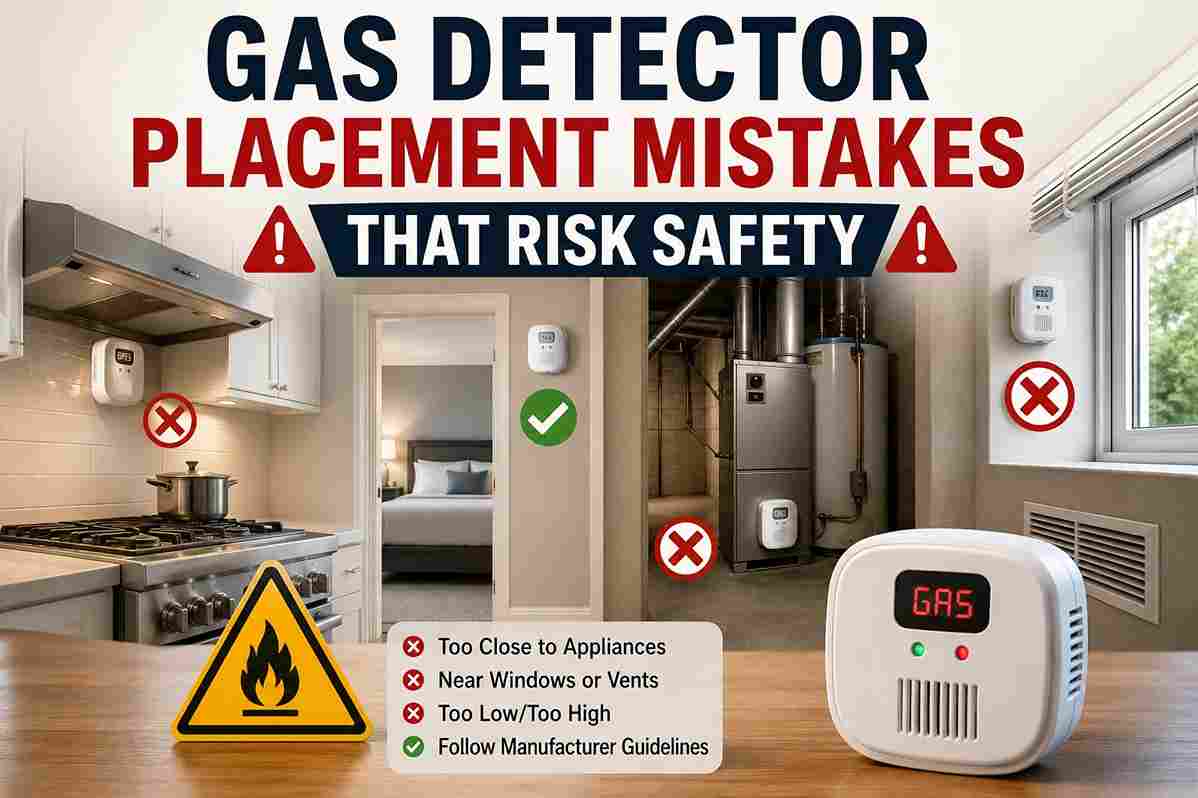
Installing Too Close to Kitchens
One of the most frequent smoke detector installation mistakes is mounting alarms directly beside cooking appliances.
Cooking smoke, steam, and airborne grease particles regularly trigger nuisance alarms. After repeated false alerts, homeowners often disable the alarm or remove the battery entirely.
Experts generally recommend placing smoke alarms at least 10 feet from cooking appliances whenever possible. This distance reduces false alarms while maintaining adequate protection.
For example, an alarm mounted directly above a stove may activate every time bacon is cooked. The same alarm installed 12 feet away in an adjacent hallway can still provide early warning without constant interruptions.
Missing Hallways and Transition Areas
Hallways often act as smoke pathways during a fire. Unfortunately, many homes have alarms only inside bedrooms or living spaces.
Transition zones connecting bedrooms to common areas should contain smoke alarms because smoke frequently travels through these areas first.
Without hallway coverage, occupants may receive a warning much later than expected.
Ignoring Basement Protection
Basements commonly contain:
- Electrical panels
- Water heaters
- Furnaces
- Laundry equipment
These systems can become ignition sources.
A fire beginning in a basement can produce significant smoke before reaching upper floors. Installing an alarm at the basement ceiling provides earlier detection and better protection for the entire home.
Incorrect Bedroom Placement
Some homeowners assume a single hallway alarm protects all sleeping areas.
Modern fire safety recommendations advise alarms inside each bedroom. Closed doors can slow smoke movement, delaying activation of hallway detectors.
Bedroom alarms provide direct protection where occupants are most vulnerable.
Mounting Detectors Near Air Vents
HVAC vents can interfere with smoke movement.
Airflow may push smoke away from a detector or dilute smoke concentrations enough to delay activation.
Avoid mounting alarms directly beside:
- Supply vents
- Ceiling fans
- Whole-house ventilation outlets
- Return air grilles
A minimum separation of several feet helps improve reliability.
Placing Alarms Too Close to Bathrooms
Steam from showers frequently causes false alarms.
Many homeowners install detectors immediately outside bathroom doors because it seems convenient. Unfortunately, repeated steam exposure can trigger nuisance alerts.
Most manufacturers recommend keeping alarms at least 10 feet from bathrooms containing showers or bathtubs whenever practical.
Smoke Detector Installation Guidelines for Every Area of the Home

Proper room-by-room planning significantly improves detection coverage.
Bedrooms
Every bedroom should contain a smoke alarm.
This recommendation is especially important for:
- Children
- Elderly residents
- Shift workers sleeping during the day
Install alarms on ceilings near the center of the room whenever possible.
Hallways
Hallways outside sleeping areas are among the most critical alarm locations.
For longer hallways, multiple detectors may be necessary to maintain consistent coverage.
Living Rooms
Living rooms often contain:
- Electronics
- Extension cords
- Entertainment systems
- Portable heaters
A strategically placed detector provides valuable early warning if a fire begins in these commonly occupied spaces.
Kitchens
Avoid placing alarms directly over cooking surfaces.
Instead, install them at an appropriate distance where smoke from actual fires can still be detected quickly without excessive nuisance alarms.
Basements
A dedicated basement alarm should be installed on the ceiling near the bottom of the stairway.
This location helps detect smoke before it spreads upward.
Attics
Finished attics used as living space should include smoke alarms.
For unfinished attics, heat detectors may sometimes be more suitable depending on temperature conditions.
Stairways
Smoke naturally rises through stairwells.
Installing detectors near stairways allows for earlier warning as smoke migrates between floors.
Garages
Garages experience temperature fluctuations and vehicle exhaust that can affect traditional smoke alarms.
Many fire safety professionals recommend heat detectors rather than standard smoke alarms in attached garages.
Distances and Measurements Homeowners Should Know

Correct placement involves more than selecting the right room.
Key measurements include:
- At least 10 feet from cooking appliances
- At least 10 feet from showers and bathrooms when possible
- At least 4 inches away from wall-ceiling intersections for ceiling-mounted units
- Between 4 and 12 inches below the ceiling for wall-mounted units
- Several feet away from HVAC supply vents
For example, if a ceiling-mounted alarm is installed directly in a room corner, smoke may not flow efficiently into the detector due to stagnant air pockets.
Following manufacturer instructions alongside local fire safety codes provides the best results.
Smoke Detector Installation for Multi-Story Homes

Multi-story homes require additional planning because smoke can move vertically very quickly.
Each level should have at least one alarm, including:
- Basements
- Main floors
- Upper stories
- Finished attics
A two-story house with four bedrooms may require seven or more alarms to achieve recommended coverage.
One common smoke detector installation mistake is assuming a single detector near the staircase protects the entire house. While stairways help channel smoke, they should supplement—not replace—floor-by-floor protection.
Interconnected systems offer the greatest advantage in larger homes. If a basement alarm activates, alarms on every floor sound simultaneously.
Hardwired vs Battery-Powered Smoke Detectors

Homeowners generally choose between two primary alarm types.
Hardwired Smoke Detectors
Hardwired systems connect directly to household electrical wiring.
Advantages include:
- Continuous power supply
- Interconnection capability
- Reduced battery dependence
Most modern systems include battery backups for power outages.
Battery-Powered Smoke Alarms
Battery-powered units offer easier installation and lower upfront costs.
Advantages include:
- No electrical work required
- Simple replacement
- Suitable for older homes
However, consistent battery replacement is essential.
For most homeowners, the best smoke detector installation strategy combines reliability, code compliance, and practical maintenance considerations.
Smart Smoke Detectors and Interconnected Systems
Technology has improved residential smoke alarms significantly.
Modern smart detectors can:
- Send phone notifications
- Identify alarm locations
- Integrate with smart home systems
- Monitor battery status remotely
Interconnected smoke alarms provide another major safety improvement.
If smoke is detected in a basement utility room, alarms throughout the home activate immediately.
This feature is particularly valuable in larger houses where occupants may not hear a single isolated detector.
Many fire safety experts consider interconnected systems among the most effective upgrades available today.
Smoke Detector Testing and Maintenance Schedule

Even perfect placement cannot compensate for poor maintenance.
Monthly Checks
Press the test button once each month.
Verify that all interconnected units activate correctly.
Battery Replacement
Replace removable batteries according to manufacturer recommendations.
Many homeowners choose a fixed annual date to simplify maintenance.
Detector Lifespan
Most smoke alarms should be replaced every 10 years.
Sensors gradually lose sensitivity over time.
Cleaning Recommendations
Dust accumulation can interfere with performance.
Vacuum alarm openings periodically using a soft brush attachment.
Regular smoke detector installation inspections help identify units needing replacement before performance declines.
Step-by-Step Smoke Detector Placement Checklist

Follow this practical action plan to improve protection throughout your home.
- Count all bedrooms.
- Install one alarm inside each bedroom.
- Install alarms outside sleeping areas.
- Add alarms on every level.
- Verify basement protection.
- Review kitchen distances.
- Check bathroom clearances.
- Inspect vent and fan proximity.
- Test interconnection features.
- Replace alarms older than 10 years.
- Create a family evacuation plan.
- Test all alarms monthly.
Completing this checklist helps ensure your smoke detector installation strategy aligns with modern recommendations.
FAQ
Where should smoke detectors not be installed?
Avoid locations near cooking appliances, bathrooms with showers, HVAC vents, ceiling fans, and areas with excessive dust or extreme temperatures.
How many smoke detectors does a house need?
Current recommendations generally call for one inside every bedroom, one outside each sleeping area, and one on every level of the home.
Should smoke alarms be installed in every bedroom?
Yes. Individual bedroom alarms provide earlier warning, particularly when doors are closed.
How far should a smoke detector be from a bathroom?
A distance of at least 10 feet is commonly recommended to reduce false alarms caused by steam.
Do smoke detectors work in garages?
Standard smoke alarms may not perform well in garages because of temperature extremes and exhaust fumes. Heat detectors are often preferred.
What is the best ceiling location for a smoke detector?
Near the center of the ceiling, away from corners, vents, and fans, generally provides the best performance.
How often should smoke detectors be replaced?
Most residential smoke alarms should be replaced every 10 years, regardless of apparent condition.
Are smart smoke detectors worth it?
For many homeowners, yes. Remote notifications, self-monitoring features, and integration with interconnected systems provide additional safety benefits.
Final Thoughts
A properly protected home depends on more than owning quality alarms. Placement determines whether smoke is detected early enough to provide meaningful warning. By avoiding common mistakes, following room-specific recommendations, maintaining adequate spacing from kitchens and bathrooms, and testing alarms regularly, homeowners can dramatically improve fire protection.
The most effective smoke detector installation plan covers every sleeping area, every floor, and every major pathway smoke is likely to travel. Take a walk through your home today, identify any gaps, and make the necessary adjustments before an emergency reveals them for you.




Leave a Reply