A smoke alarm may go unnoticed for years, but when a kitchen fire breaks out, an electrical outlet overheats, or wiring inside a wall begins to smolder, it becomes one of the most important safety devices in the home. Knowing how to test smoke alarm systems before an emergency occurs ensures they will respond when every second matters.
Many homeowners assume their smoke alarm is working simply because it hasn’t started chirping. In reality, fire investigators and safety experts frequently find alarms that failed during emergencies because of dead batteries, dust-clogged sensors, aging components, or years of neglected maintenance.
Understanding how to inspect and test a smoke alarm correctly is one of the easiest and most effective ways to improve home fire safety. While the built-in test button confirms the alarm’s electronics and sounder are functioning, it does not fully verify that the smoke sensor can detect an actual fire.
This guide explains everything homeowners need to know, including monthly inspections, proper testing methods, battery maintenance, sensor care, and when it’s time to replace an aging smoke alarm. By following these simple steps, you can keep your alarms ready to provide reliable protection when it matters most.
Why Smoke Alarm Testing Matters

Residential fires continue to cause thousands of injuries and significant property losses each year. According to fire safety organizations, working smoke alarms can reduce the risk of dying in a home fire by providing critical early warning.
However, alarms do not fail only because of dead batteries. Common causes include:
- Dust buildup inside sensing chambers
- Battery corrosion
- Expired sensors
- Electrical failures
- Improper installation locations
- Paint contamination
- Insect intrusion
Consider a common example. A homeowner presses the test button every few months and hears a loud beep. Everything appears normal. Yet the sensing chamber has accumulated years of dust. When actual smoke develops, detection is delayed.
Testing should therefore verify more than just power.
Regular inspections help identify problems before an emergency occurs.
Understanding Different Types of Smoke Alarms

Not all smoke alarms detect fire in the same way. Understanding the technology inside your device helps you perform more effective maintenance and testing.
Ionization Smoke Alarms
Ionization alarms respond quickly to fast-flaming fires.
Examples include:
- Paper fires
- Grease fires
- Rapidly spreading combustible materials
These alarms contain a small ionization chamber that reacts when combustion particles disrupt the electrical current.
While effective for flaming fires, they may be somewhat slower to detect certain smoldering situations.
Photoelectric Smoke Alarms
Photoelectric models excel at detecting slow-burning fires.
Common examples include:
- Upholstered furniture fires
- Mattress fires
- Electrical wiring fires
- Smoldering wall insulation
A light beam inside the sensing chamber changes when smoke particles enter.
Many fire safety experts prefer photoelectric technology because many residential fires begin as slow-smoldering events.
Dual-Sensor Smoke Alarms
Dual-sensor alarms combine both ionization and photoelectric technologies.
Benefits include:
- Broader fire detection capability
- Improved response to multiple fire types
- Enhanced whole-home protection
Although they typically cost more, they offer comprehensive coverage.
Heat Detector Smoke Alarm Systems
Modern homes increasingly use heat detector alarms.
When one unit detects smoke:
- Every connected alarm sounds
- Occupants receive warning throughout the house
- Sleeping residents have a better chance of hearing the alarm
Heat detectors can occur through:
- Hardwired systems
- Wireless systems
- Smart-home integrations
These systems require additional testing procedures beyond individual alarm checks.
How to Test Smoke Alarm Devices Correctly

Many homeowners believe pressing the test button completes the entire process.
In reality, comprehensive testing involves multiple steps. Manufacturers generally recommend regular function checks, periodic sensor verification, and ongoing maintenance.
A proper testing routine confirms:
- Power availability
- Speaker operation
- Sensor responsiveness
- Interconnection performance
- Battery backup readiness
The following procedures provide a more complete approach.
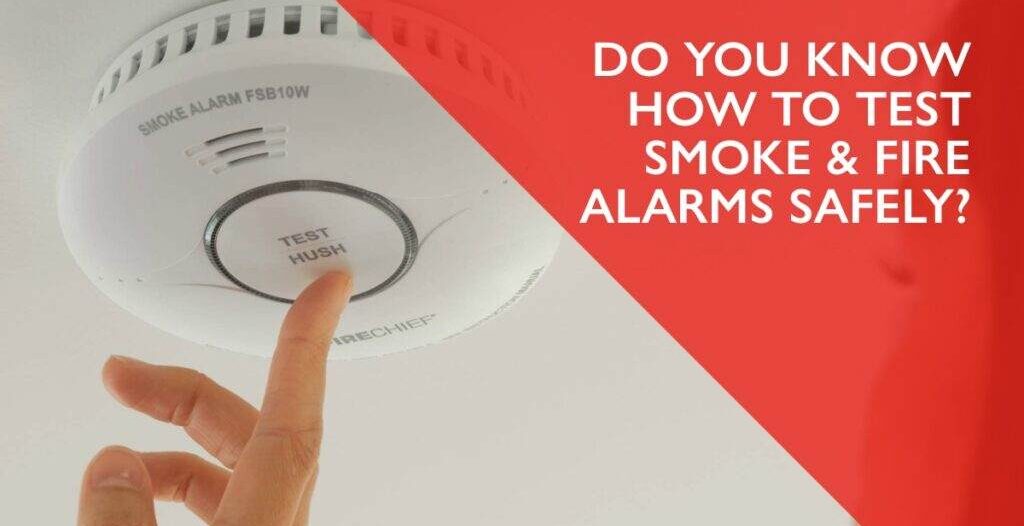
How to Test Smoke Alarm Using the Built-In Test Button
The built-in test button is the starting point.
Follow these steps:
- Stand beneath the alarm.
- Press and hold the test button.
- Wait several seconds.
- Verify that a loud alarm sounds.
- Release the button.
- Confirm the alarm resets normally.
What this test confirms:
- Electrical power is present.
- Internal circuitry functions.
- The sounder works properly.
What it does not confirm:
- Smoke detection accuracy.
- Sensor cleanliness.
- Real-world smoke response.
Therefore, additional testing remains important.
How to Test Smoke Alarm With Approved Test Aerosol
Smoke alarm test aerosol is specifically designed for sensor verification.
Procedure:
- Read manufacturer instructions.
- Use approved aerosol products only.
- Spray briefly toward the sensing chamber.
- Step back.
- Wait for activation.
- Ventilate the area afterward.
Benefits include:
- Sensor verification
- More realistic testing
- Better detection assessment
Avoid improvised testing methods that may contaminate the sensor.
How to Test Smoke Alarm in Interconnected Systems
Interconnected systems require extra verification.
Testing process:
- Activate one alarm.
- Confirm local activation.
- Walk through the home.
- Verify all connected units sound.
- Check every floor.
- Confirm proper reset behavior.
If one alarm fails to activate the others, investigate immediately.
Possible causes include:
- Wiring faults
- Wireless communication failures
- Device incompatibility
- Aging equipment
Monthly Smoke Alarm Testing Checklist: How to Test Smoke Alarm Monthly

Monthly inspections require only a few minutes but can identify problems before they become serious.
Visual Inspection
- Check for physical damage.
- Verify proper mounting.
- Confirm alarms remain unobstructed.
- Look for paint contamination.
Dust Inspection
- Examine vents and openings.
- Look for visible debris.
- Remove light dust accumulation.
Test Button Check
- Activate every alarm.
- Verify loud operation.
- Confirm proper reset.
Sound Verification
- Ensure alarms are clearly audible.
- Test from bedrooms and hallways.
- Verify occupants can hear activation throughout the home.
Notification Verification
For interconnected or smart systems:
- Confirm linked alarms activate.
- Check mobile notifications if applicable.
- Verify monitoring integrations.
A practical monthly habit is testing alarms on the first weekend of each month. Consistency helps prevent missed inspections.
Checklist of How to Test Smoke Alarm Maintenance Yearly

Monthly checks identify obvious problems, but annual maintenance provides a deeper review.
Use the following yearly checklist.
Cleaning Procedures
- Vacuum exterior vents using a soft brush attachment.
- Remove dust from surrounding ceiling areas.
- Follow manufacturer cleaning instructions.
- Never spray cleaners directly into the unit.
Battery Replacement
For replaceable battery models:
- Install fresh batteries annually.
- Replace weak batteries immediately.
- Use battery types approved by the manufacturer.
Sensor Inspection
Look for:
- Insect contamination
- Corrosion
- Moisture damage
- Excessive dust buildup
Expiration Date Review
Most smoke alarms have a lifespan of approximately ten years.
Check:
- Manufacturing date
- Replacement date
- End-of-life markings
Whole-House Testing
Conduct:
- Individual alarm testing
- Interconnection testing
- Battery backup verification
Annual maintenance often reveals issues that monthly inspections miss.
Battery Backup Procedures Every Homeowner Should Follow

Power outages frequently occur during storms and severe weather events. Battery backups help maintain protection when utility power is unavailable.
Replaceable Battery Models
These alarms require routine battery replacement.
Best practices:
- Replace batteries at least annually.
- Replace immediately after low-battery warnings.
- Keep spare batteries available.
Common mistake:
- Removing batteries to stop nuisance alarms.
10-Year Sealed Battery Models
These units contain non-removable batteries.
Advantages:
- Reduced maintenance
- Fewer forgotten battery changes
- Long-term reliability
Once the battery reaches end of life, replace the entire alarm.
Hardwired Alarms With Backup Batteries
Hardwired units still require battery maintenance.
Many homeowners assume household wiring eliminates battery concerns.
It does not.
Backup batteries protect during:
- Electrical outages
- Circuit interruptions
- Breaker failures
Always test backup operation according to manufacturer instructions.
Signs Your Smoke Alarm Needs Replacement

Even well-maintained alarms eventually wear out.
Replace the device if you notice:
Yellowing Plastic
Discoloration may indicate age-related deterioration.
Frequent False Alarms
Repeated nuisance activations can signal sensor degradation.
Failed Testing
Any alarm that repeatedly fails testing should be replaced promptly.
End-of-Life Warnings
Many modern alarms emit specific replacement alerts.
Expired Devices
Most manufacturers recommend replacement after approximately ten years.
Check the manufacturing date printed on the unit.
Common Smoke Alarm Testing Mistakes

Many failures stem from simple oversights.
Common mistakes include:
- Ignoring monthly inspections
- Assuming electrical power guarantees proper operation
- Skipping interconnected system checks
- Forgetting battery replacement
- Testing only one alarm in the house
- Ignoring end-of-life warnings
- Allowing dust accumulation
A complete testing program addresses every alarm, not just the one nearest the kitchen.
Recommended Schedule for How to Test Smoke Alarm Tasks

A structured schedule simplifies maintenance.
Monthly
- Visual inspection
- Test button verification
- Interconnection checks
Every Six Months
- Dust removal
- Sensor area cleaning
- Battery condition review
Annually
- Full maintenance inspection
- Battery replacement when applicable
- Whole-house testing
Every Ten Years
- Replace aging alarms
- Upgrade outdated technology
- Review placement locations
Following a schedule reduces the likelihood of forgotten maintenance.
Frequently Asked Questions
How often should smoke alarms be tested?
Most manufacturers and fire safety organizations recommend monthly testing and annual maintenance inspections.
Can I use real smoke to test a smoke alarm?
Real smoke may contaminate sensors and produce inconsistent results. Approved testing aerosols are safer and more reliable.
Why does my smoke alarm fail the test button?
Common causes include dead batteries, wiring issues, internal component failure, or an expired alarm.
How long do smoke alarms last?
Most residential smoke alarms should be replaced approximately every ten years unless the manufacturer specifies otherwise.
Should interconnected alarms all sound during testing?
Yes. Interconnected systems should activate every connected unit when one alarm enters alarm mode.
What is the safest way to test a smoke alarm and how to test smoke alarm effectively?
The safest approach combines manufacturer-approved test procedures, routine button testing, periodic sensor verification, and regular maintenance.
How often should I review how to test smoke alarm procedures?
Review testing procedures annually or whenever you install new equipment, change alarm models, or update your home’s fire protection system.
Conclusion
Smoke alarms require more than an occasional button press. Effective protection depends on regular inspections, annual maintenance, sensor verification, battery backup readiness, and timely replacement of aging devices.
A practical safety routine includes monthly testing, periodic cleaning, annual system reviews, and full replacement at the end of the alarm’s service life. Homeowners who follow a structured schedule dramatically improve the likelihood that their alarms will function correctly during an emergency.
If you are unsure where to begin, start by reviewing every alarm in your home today and creating a maintenance calendar. Consistently following how to test smoke alarm procedures is one of the simplest and most valuable steps you can take to protect your household.


Leave a Reply