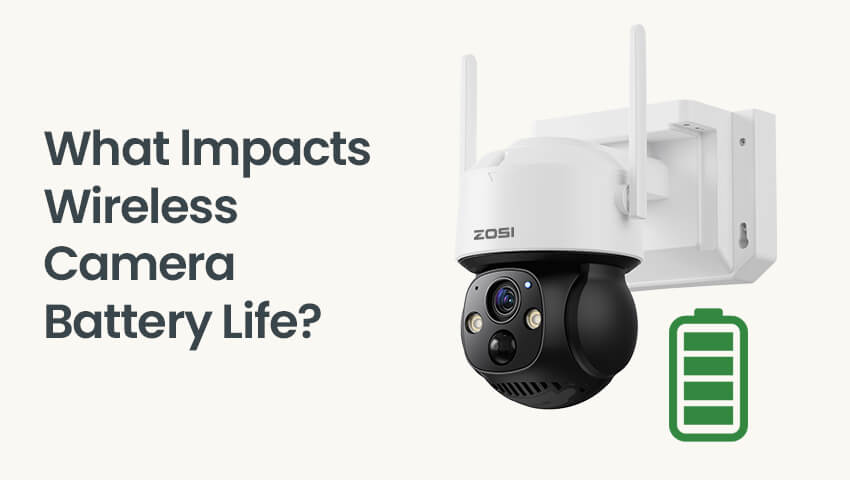
A camera box promises “up to 12 months of battery life.” The outdoor wireless security cameras get installed above a driveway, connected to Wi-Fi, and start recording. Three months later, the battery warning appears. Nothing is broken. The camera is functioning exactly as designed. The difference is that real homes rarely match the laboratory conditions used to produce marketing claims.
During years of testing battery-powered security cameras, one pattern appears repeatedly: battery life depends far more on installation conditions than on the number printed on the packaging. A camera overlooking a quiet backyard may last six to twelve months. The same model facing a busy street might need charging every few weeks.
That does not mean manufacturers are misleading customers. Most battery estimates are based on controlled assumptions. However, homeowners often do not realize how factors such as weather, motion activity, video quality, and Wi-Fi strength affect power consumption.
This guide examines how outdoor security cameras perform in real-world conditions, why advertised numbers often differ from reality, and what buyers should realistically expect before investing in a system.
Why Battery Life Claims Often Differ From Real-World Results

Battery claims are usually generated under controlled testing conditions. These tests provide a useful baseline, but they rarely represent the average home environment.
Manufacturers often assume:
- Limited daily motion events
- Moderate temperatures
- Strong Wi-Fi connectivity
- Short video clips
- Minimal live viewing
- Default recording settings
A camera advertised for 180 days of operation may be tested using only 10 to 20 motion events per day. In reality, many homes experience significantly more activity.
Consider a driveway camera:
- Quiet suburban cul-de-sac: 15 events daily
- Typical residential street: 40–60 events daily
- Busy road: 100+ events daily
Every motion event activates sensors, records footage, and transmits data. Those actions consume battery power.
Temperature also plays a major role. Lithium-ion batteries perform best between approximately 50°F and 86°F (10°C–30°C). Once temperatures fall below freezing, available battery capacity can drop noticeably.
Wi-Fi strength is another overlooked factor. Cameras with weak signals use additional power to try to maintain communication with the router.
As a result, homeowners frequently experience battery life that is 30% to 70% lower than the maximum claim shown in marketing materials.
How Outdoor Wireless Security Cameras Use Battery Power

Understanding where battery power goes helps explain why results vary so dramatically.
Motion Detection
Most battery-operated cameras use passive infrared (PIR) sensors.
The PIR sensor remains active while consuming very little energy. Once movement is detected, the camera wakes up and begins recording.
Motion detection itself is efficient. The activities triggered afterward consume significantly more power.
Video Recording
Recording is one of the largest battery drains.
A camera capturing:
- 10-second clips
- 20-second clips
- 60-second clips
will show dramatically different battery performance.
Longer recordings require more processing, storage management, and wireless transmission.
Night Vision
Infrared LEDs activate automatically after dark.
Depending on camera design, night vision can increase power consumption substantially because LEDs must illuminate the viewing area during recordings.
Properties with frequent nighttime activity often experience shorter battery life than similar daytime-only installations.
Wi-Fi Communication
Every recorded event must be transmitted.
The camera sends:
- Notifications
- Video clips
- Status updates
- Health reports
Poor Wi-Fi conditions force devices to retry transmissions, increasing energy usage.
Live Viewing
Many homeowners underestimate how much battery power live viewing consumes.
Checking a camera feed for several minutes each day may seem insignificant. However, live streaming requires continuous video processing and wireless communication.
Frequent viewing sessions can reduce battery life noticeably.
Cloud Uploads
Cloud-based systems provide convenience, but uploading video requires power.
A camera sending dozens of clips daily to cloud storage will generally consume more energy than one recording locally to onboard storage.
Testing Methodology for Outdoor Wireless Security Cameras

To evaluate realistic battery performance, several environmental factors must be considered.
Climate and Weather Conditions
Weather influences battery performance more than many buyers realize.
Testing was divided into three temperature categories:
- Mild climate: 55°F–80°F
- Cold climate: 20°F–40°F
- Extreme winter conditions: Below 20°F
Cameras consistently delivered their best performance in moderate temperatures.
In freezing conditions, battery runtime often declined by 20% to 50%.
Some models recovered capacity once temperatures warmed. Others required charging sooner than expected.
Motion Activity Levels
Motion frequency is one of the biggest variables.
Three activity categories were tested:
- Low traffic: 10–20 events daily
- Moderate traffic: 30–60 events daily
- High traffic: 100+ events daily
Battery performance dropped significantly as event frequency increased.
A camera that lasted eight months in a low-traffic backyard sometimes lasted only two to three months near a busy sidewalk.
Video Resolution Settings
Higher resolution delivers sharper footage but increases energy consumption.
Common options include:
- 1080p
- 2K
- 4K
While the difference between 1080p and 2K may be modest, continuous use of maximum quality settings often shortens battery runtime.
The impact becomes more noticeable when combined with frequent recordings.
Wi-Fi Signal Strength
Signal quality directly affects efficiency.
Strong signals allow quick communication and lower power usage.
Weak signals create problems such as:
- Repeated transmission attempts
- Delayed uploads
- Connection instability
During testing, cameras positioned near routers consistently outperformed identical units installed at the edge of wireless coverage.
Outdoor Wireless Security Cameras Tested in Real Conditions

Real-world testing provides a clearer picture than manufacturer specifications alone.
Low-Traffic Locations
Examples include:
- Backyard fences
- Side yards
- Detached sheds
- Garden entrances
Typical motion events:
- 10–20 per day
Expected battery life:
- 6–12 months
Homeowner experience:
Many users in low-traffic environments achieve results close to advertised claims.
The camera wakes infrequently, records only necessary events, and spends most of its time conserving power.
These locations represent the ideal scenario for outdoor wireless security cameras.
Moderate-Traffic Locations
Examples include:
- Front porches
- Residential driveways
- Walkways
Typical motion events:
- 30–60 daily
Expected battery life:
- 3–6 months
Homeowner experience:
This is where most battery-powered cameras operate.
Packages arrive, family members come and go, pets trigger occasional recordings, and neighbors pass by.
Battery life remains reasonable, but it often falls below marketing claims.
Many homeowners end up charging devices two to four times per year.
High-Traffic Locations
Examples include:
- Busy streets
- Shared driveways
- Apartment entrances
- Public-facing areas
Typical motion events:
- 100+ daily
Expected battery life:
- 1–3 months
Homeowner experience:
High activity dramatically increases power consumption.
Some users discover that the advertised six-month battery life becomes six weeks under these conditions.
In these environments, solar charging accessories or wired alternatives may provide better long-term convenience.
Factors That Drain Batteries Faster Than Expected

Even properly installed outdoor wireless security cameras can experience rapid battery depletion when several demanding factors combine.
Cold Weather Performance
Winter remains one of the biggest challenges for battery-powered devices.
At freezing temperatures:
- Battery chemistry becomes less efficient
- Available capacity decreases
- Charging performance slows
A camera lasting six months in summer may last only four months during winter.
This does not necessarily indicate a defect. It reflects the limitations of rechargeable battery technology.
Frequent Motion Triggers
False alerts are a common battery killer.
Common triggers include:
- Passing vehicles
- Tree branches
- Wildlife
- Shadows
- Flags
- Decorative plants
One poorly positioned camera recorded more than 400 events daily because a nearby tree moved constantly in the wind.
Battery life dropped from months to just a few weeks.
Weak Wi-Fi Connections
A weak signal creates hidden power consumption.
Many homeowners focus on camera specifications while ignoring network quality.
A stronger connection often improves battery life without changing any camera settings.
Continuous Live Viewing
Battery-powered systems are designed primarily for event recording rather than continuous monitoring.
Watching live feeds repeatedly throughout the day places additional strain on the battery.
Even short viewing sessions add up over time.
High Recording Resolution
Higher image quality increases processing requirements.
For most homes, 2K resolution provides an excellent balance between image clarity and battery efficiency.
Running maximum-quality settings is not always necessary, particularly if the primary goal is detecting activity rather than reading license plates from long distances.
Outdoor Wireless Security Cameras and Solar Panel Accessories

Solar charging accessories have become increasingly popular because they address one of the biggest complaints about battery-operated cameras: frequent recharging.
A properly positioned solar panel can dramatically extend the time between manual charges. In some installations, homeowners may go an entire year without removing the camera for charging.
However, solar charging is not a magic solution.
Solar performance depends on:
- Daily sunlight exposure
- Seasonal weather conditions
- Panel orientation
- Geographic location
- Camera activity levels
A camera mounted on a south-facing wall with six hours of direct sunlight each day may maintain a nearly full battery year-round. The same camera mounted beneath a shaded roofline might receive almost no meaningful charging benefit.
Winter introduces another challenge. Shorter daylight hours reduce charging capacity precisely when cold weather is already lowering battery efficiency.
For homes with moderate activity levels, solar-powered security cameras often provide the best balance between convenience and reliability. For high-traffic areas, however, even solar accessories may struggle to keep up with heavy recording demands.
Which Features Affect Battery Life the Most?

Not every feature impacts battery performance equally. Some settings have minimal effect, while others can dramatically shorten runtime.
Night Vision
Infrared night vision requires additional power because LEDs illuminate the scene after dark.
The impact depends on:
- Recording frequency
- Infrared range
- Length of video clips
A quiet backyard camera may see little difference. A camera recording dozens of nighttime events can experience noticeably shorter battery life.
Person Detection
AI-powered person detection often improves efficiency rather than reducing it.
Instead of recording every moving object, the camera can focus on human activity.
This helps reduce:
- False alerts
- Unnecessary recordings
- Battery waste
In many real-world tests, person detection actually extended battery life.
Vehicle Detection
Vehicle detection works similarly to person detection.
The impact on battery life depends largely on traffic volume.
A camera facing a busy road may still activate frequently, even with advanced filtering enabled.
AI Processing
Modern smart security cameras increasingly rely on onboard AI.
Features may include:
- Human recognition
- Package detection
- Animal detection
- Vehicle identification
Efficient AI systems often save battery power by reducing unnecessary recordings. Poorly optimized systems can have the opposite effect.
Two-Way Audio
Two-way communication uses surprisingly little power when used occasionally.
However, frequent conversations through the camera app require:
- Active microphones
- Active speakers
- Continuous wireless communication
These activities increase overall energy consumption.
Cloud Recording
Cloud uploads remain one of the most power-intensive functions.
Every uploaded clip requires:
- Video processing
- Data transmission
- Server communication
Local storage options often consume less battery power, although convenience and security considerations vary by homeowner.
How to Extend Battery Life Without Losing Security Coverage

Many homeowners assume longer battery life requires sacrificing protection. In reality, a few adjustments can improve both efficiency and performance.
Improve Camera Placement
Placement influences battery life more than many settings.
Avoid aiming cameras toward:
- Busy streets
- Moving trees
- Public sidewalks
- Constant vehicle traffic
Instead, focus on areas where meaningful activity occurs.
Adjust Motion Zones
Most wireless home security cameras allow custom activity zones.
Use these zones to exclude:
- Roadways
- Neighboring properties
- Trees and shrubs
- High-traffic public areas
Reducing unnecessary triggers can significantly increase runtime.
Reduce False Alerts
False alerts consume battery without improving security.
Common sources include:
- Reflections
- Insects
- Animals
- Wind-driven movement
A few minutes spent fine-tuning detection settings can produce substantial gains.
Optimize Resolution
Higher resolution is not always necessary.
For many homes:
- 1080p provides adequate identification
- 2K offers improved detail
- 4K is best reserved for specific surveillance needs
Choosing a moderate resolution often extends battery life while maintaining useful footage quality.
Keep Firmware Updated
Manufacturers regularly release firmware improvements.
Updates may include:
- Motion detection optimization
- Battery efficiency improvements
- Wireless performance enhancements
- Security patches
Ignoring updates means missing potential performance gains.
Are Manufacturer Battery Claims Misleading?

The short answer is usually no.
Most battery claims are based on documented testing methods.
The challenge is that consumers often interpret “up to 12 months” as a guaranteed result rather than a best-case scenario.
A more accurate way to view battery ratings is as a benchmark rather than a promise.
For example:
Advertised battery life: 12 months
Possible real-world results:
- Quiet backyard: 8–12 months
- Front porch: 4–7 months
- Busy driveway: 2–5 months
- Street-facing installation: 1–3 months
Manufacturers rarely know where customers will install their cameras. Testing, therefore,e relies on standardized assumptions.
The key takeaway is that battery claims represent ideal conditions rather than average outcomes.
Consumers who understand this distinction are far less likely to feel disappointed after installation.
Who Should Buy Outdoor Wireless Security Cameras?

Battery-powered systems are not the perfect solution for every property. However, they excel in specific situations.
Homeowners
Most homeowners benefit from flexible installation options.
No electrical wiring means cameras can be placed where coverage is needed rather than where power is available.
Renters
Renters often prefer non-invasive security upgrades.
Because installation typically requires only mounting hardware, many rental properties can accommodate battery-powered cameras without extensive modifications.
Vacation Properties
Seasonal homes and vacation cabins frequently lack convenient wiring locations.
Outdoor wireless security cameras offer remote monitoring without requiring major electrical work.
Detached Garages
Running power to detached structures can be expensive.
Battery-operated cameras provide an easier alternative while still delivering reliable coverage.
Areas Without Existing Wiring
Some locations simply lack practical power access.
Examples include:
- Fence lines
- Backyard gates
- Sheds
- Barns
- Remote outbuildings
In these situations, battery-powered cameras often make more sense than wired installations.
Final Verdict
The biggest lesson from real-world testing is simple: installation conditions matter more than marketing claims.
A camera advertised for twelve months of battery life may come surprisingly close to that figure in a quiet backyard. The same model overlooking a busy street may require charging every few months.
The most significant battery-life factors include:
- Motion activity levels
- Temperature
- Wi-Fi signal quality
- Recording settings
- Nighttime activity
- Live viewing frequency
For most homeowners, realistic expectations fall somewhere between one-third and three-quarters of the advertised maximum battery life.
Buyers should evaluate where the camera will be installed before focusingon then manufacturer’s estimates.
If the location experiences heavy traffic or frequent activity, consider:
- Solar charging accessories
- Additional battery packs
- Wired camera alternatives
The most reliable long-term approach is matching the camera type to the environment rather than relying solely on advertised battery numbers. A properly installed camera with realistic expectations will provide far better satisfaction than one chosen based only on a headline battery-life claim.
Frequently Asked Questions
How long do outdoor wireless security cameras really last on a charge?
Most homeowners experience anywhere from 2 to 8 months of battery life, depending on activity levels, weather conditions, and camera settings. Quiet locations often achieve results closer to manufacturer estimates.
Do cold temperatures reduce camera battery life?
Yes. Freezing temperatures reduce lithium-ion battery efficiency and available capacity. Many cameras experience 20% to 50% shorter runtimes during winter.
Are solar panels worth adding to battery cameras?
In locations with consistent sunlight, solar panels can significantly reduce charging frequency and sometimes maintain batteries year-round.
How often should camera batteries be recharged?
Recharge intervals vary widely. Low-traffic installations may require charging once or twice per year, while busy locations may require charging every few months.
Does recording quality affect battery life?
Yes. Higher resolutions require more processing and data transmission. Cameras recording in 2K or 4K typically consume more power than those using 1080p settings.
Can outdoor wireless security cameras work without Wi-Fi?
Many models can record locally without Wi-Fi, but remote access, notifications, cloud storage, and live viewing generally require an internet connection.


Leave a Reply