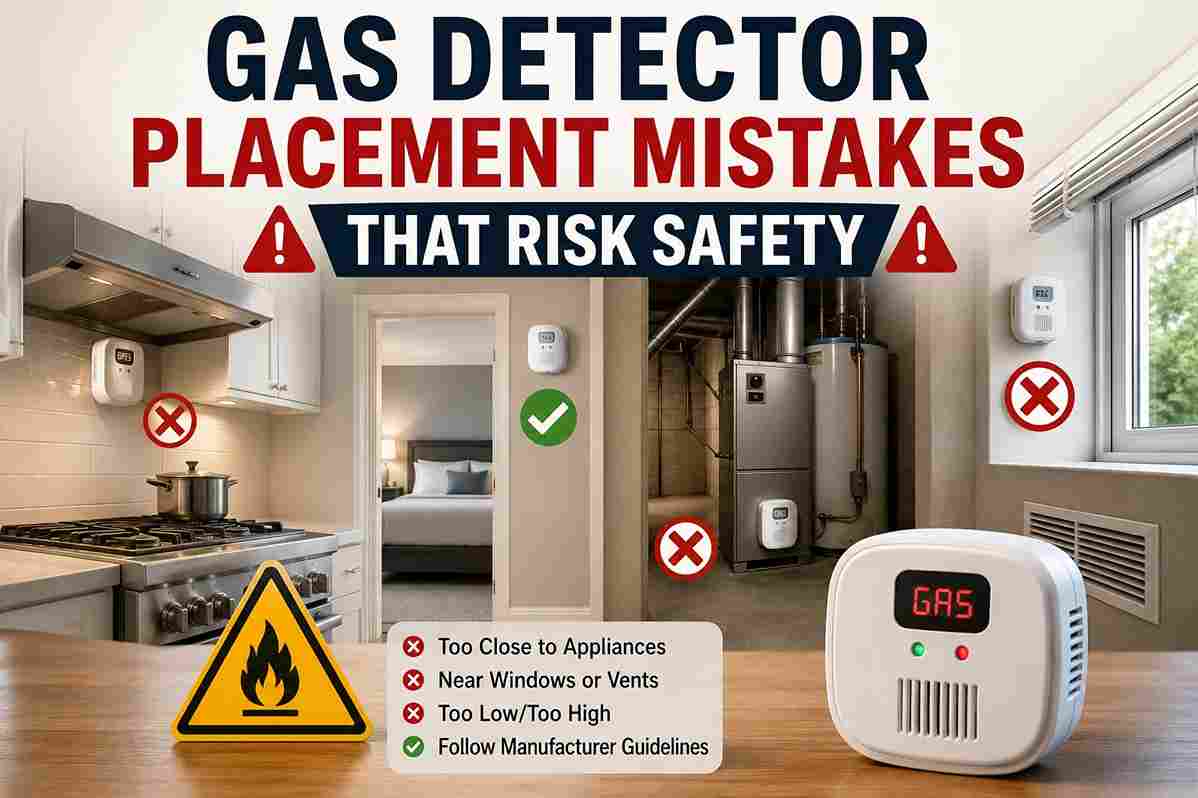
A family installs a gas detector in the kitchen after purchasing a new gas range. They assume the entire home is protected and rarely think about it again. Several months later, a small leak develops near a basement furnace. Because the detector is located far from the source, the leak goes unnoticed until a maintenance technician discovers it during a routine inspection.
Situations like this happen more often than many people realize. A detector can only alert you if gas reaches its sensing chamber. That means placement matters just as much as product quality. Even a highly rated detector may fail to provide timely warning if it is installed in the wrong location.
Whether your home uses natural gas for heating, propane for appliances, or both, understanding where to place detection devices can significantly improve response time during a leak. This guide explains the best locations, common mistakes, and practical installation strategies that help maximize protection throughout your home.
Why Proper Gas Detector Placement Matters

Gas detectors are designed to identify combustible gases before concentrations become dangerous. Their effectiveness depends largely on how quickly they can detect a leak after it begins.
Many homeowners focus on purchasing a high-quality device but spend little time thinking about placement. Unfortunately, a poorly positioned detector can delay alerts and reduce overall protection.
Proper placement helps achieve several goals:
- Earlier leak detection
- Faster evacuation when necessary
- Reduced risk of fire
- Better protection during sleeping hours
- Improved monitoring of gas-powered equipment
Most manufacturers provide recommended mounting locations based on the type of gas being monitored. Following those recommendations often makes a larger difference than choosing between similarly rated detector models.
Understanding How Different Gases Move Inside a Home
Before deciding where to place sensors, it helps to understand how various gases behave indoors. Different gases have different densities, which affects where they accumulate.
Natural Gas Behavior
Natural gas is lighter than air. When released indoors, it generally rises toward the ceiling.
Because of this characteristic, a gas detector intended for natural gas is often installed:
- High on a wall
- Near the ceiling
- Within manufacturer-recommended distance from appliances
For example, leaks from a gas stove or furnace tend to move upward and collect near upper portions of enclosed rooms before dispersing.
Propane Gas Behavior
Propane behaves very differently. It is heavier than air and sinks toward the floor.
A gas detector designed for propane should typically be installed lower on a wall according to manufacturer guidelines.
Common areas where propane may accumulate include:
- Basements
- Crawl spaces
- Utility rooms
- Floor-level corners
This difference explains why placement recommendations vary depending on fuel type. A detector mounted correctly for natural gas may not provide optimal coverage for propane.
Best Places to Install a Gas Detector Near Bedrooms

Sleeping occupants are among the most vulnerable during a gas leak because warning signs may go unnoticed for hours.
For that reason, one of the most effective locations for a gas detector is near sleeping areas.
Recommended placement includes:
- Hallways outside bedrooms
- Bedroom wings of larger homes
- Upstairs sleeping areas
- Guest room corridors
Many fire safety professionals recommend positioning detectors close enough that alarms can be heard throughout sleeping areas.
If your home has multiple floors, each level should ideally have detection coverage near occupied bedrooms.
Multi-Bedroom Home Strategy
In larger homes, relying on a single unit often creates coverage gaps.
A practical approach includes:
- One detector near upstairs bedrooms
- One near main-floor sleeping areas
- Additional units near major gas appliances
This arrangement improves warning time regardless of where a leak originates.
Kitchen Placement Guidelines
The kitchen is one of the most common locations for gas-powered appliances, making it a logical place for gas leak monitoring.
However, placing detectors directly beside a stove is usually not recommended.
Cooking fumes, steam, grease, and heat can trigger nuisance alarms or reduce sensor performance over time.
A better strategy is positioning the detector according to manufacturer specifications, often several feet away from the appliance while remaining within the same room.
Common Kitchen Leak Sources
Potential sources include:
- Gas ranges
- Cooktops
- Flexible gas connectors
- Shutoff valves
- Appliance fittings
A properly positioned gas detector can provide early warning if any of these components develop a leak.
Areas to Avoid in Kitchens
Avoid mounting near:
- Range hoods
- Ceiling fans
- Open windows
- Air vents
- Areas exposed to heavy steam
Air movement can disperse gas before it reaches the sensor, reducing detection effectiveness.
Protecting Basements, Utility Rooms, and Furnace Areas

Many serious gas leaks begin in utility spaces because these rooms contain fuel-burning equipment and gas connections.
Basements often house:
- Furnaces
- Water heaters
- Boilers
- Gas piping
- Pressure regulators
These locations deserve dedicated monitoring rather than relying on detectors elsewhere in the house.
If your furnace is located in a basement mechanical room, install detection equipment according to the gas type and manufacturer instructions.
Why Utility Areas Require Special Attention
Utility rooms often remain unoccupied for long periods.
A leak can continue unnoticed until concentrations become significant. Dedicated detection helps identify problems earlier and may prevent extensive damage or dangerous conditions.
Where to Install Gas Detectors Near Water Heaters and Boilers
Water heaters and boilers contain multiple connections that can eventually wear, loosen, or fail.
Placing a gas detector near these appliances creates another layer of protection.
Recommended locations include:
- Adjacent utility rooms
- Nearby mechanical spaces
- Equipment closets with adequate airflow
Avoid mounting directly above high-heat exhaust components. Excessive heat can interfere with sensor performance and shorten device lifespan.
Many manufacturers recommend maintaining several feet of separation between sensors and combustion equipment.
Garage and Workshop Considerations
Garages frequently contain fuel-powered equipment, gas appliances, and storage areas that increase leak risks.
Potential sources include:
- Gas-fired water heaters
- Workshop heaters
- Portable propane equipment
- Fuel storage systems
A gas detector installed in an appropriate location can provide valuable monitoring in these areas.
Workshops with limited ventilation deserve particular attention because gases may accumulate more quickly than in open spaces.
Places You Should Never Install a Gas Detector

Knowing where not to install a detector is just as important as choosing the right location. Certain spots can interfere with sensor performance, delay detection, or cause frequent false alarms.
Near Windows and Doors
Open windows and frequently used exterior doors create constant airflow changes. If a leak occurs nearby, moving air may push gas away from the sensor before it reaches detectable levels.
For example, a detector mounted beside a patio door could miss the early stages of a leak because outdoor air continuously dilutes the gas concentration.
Whenever possible, keep detectors several feet away from openings that experience regular drafts.
Behind Furniture
Large furniture pieces can block airflow and prevent gas from reaching the sensor.
Common examples include:
- Bookshelves
- Cabinets
- Entertainment centers
- Large sofas
A detector hidden behind furniture may remain operational, but its ability to monitor the room effectively can be reduced. The sensing chamber should always have access to open air.
Near Vents and Fans
Supply vents, return vents, ceiling fans, and exhaust systems can disrupt gas movement patterns.
Strong airflow may:
- Push gas away from the sensor
- Cause delayed detection
- Trigger inconsistent readings
- Increase nuisance alarms
Before mounting any detector, identify nearby HVAC vents and maintain the spacing recommended by the manufacturer.
Smart Gas Detector Placement for Larger Homes
A single detector rarely provides complete coverage in a large house. Homes with multiple floors, long hallways, finished basements, or detached living areas benefit from a layered approach.
Instead of thinking about one central location, divide the house into protection zones.
A practical layout may include:
- One detector near bedroom areas
- One near major cooking appliances
- One in the basement utility room
- One near water-heating equipment
- Additional units on separate floors
This strategy reduces the chances of a leak occurring far from the nearest sensor.
Integrating Detection with Smart Home Systems
Modern detection systems can do more than sound an alarm.
Many smart devices can:
- Send mobile notifications
- Trigger automated shutoff valves
- Activate smart lighting
- Notify multiple family members
- Integrate with security systems
For vacation homes or households that are frequently unoccupied, remote alerts provide an additional layer of protection.
Coverage Planning Tips
When mapping detector locations, start by identifying every gas-powered appliance in the home.
Create a simple checklist:
- Furnace location
- Water heater location
- Boiler location
- Stove and cooktop location
- Garage heater location
- Propane appliance location
The resulting map helps identify areas that require dedicated monitoring.
Maintenance and Testing Best Practices
Even the best installation strategy can fail if detectors are not maintained properly.
Like smoke alarms, gas detection devices require routine testing and periodic replacement.
How Often Should You Test a Detector?
Most manufacturers recommend testing monthly using the built-in test button.
A monthly test confirms:
- Alarm operation
- Power availability
- Speaker functionality
- Electronic system health
Testing takes only a few seconds and helps identify problems before an emergency occurs.
Battery Replacement Guidelines
Battery-powered models require regular battery checks.
Many manufacturers recommend:
- Replacing batteries at least once per year
- Replacing immediately when low-battery warnings appear
- Using approved battery types
Some modern units include sealed batteries designed to last several years.
Regardless of the power source, never ignore warning chirps or fault indicators.
Understanding Detector Lifespan
Gas sensors do not last forever.
Most residential detectors have service lives ranging from five to ten years, depending on the sensor technology and manufacturer specifications.
Check the device label for:
- Manufacturing date
- Replacement date
- End-of-life warnings
Once the sensor reaches its rated lifespan, replacement is usually recommended even if the unit still powers on.
Cleaning and Inspection
Dust and debris can affect sensor performance.
Every few months:
- Inspect vents and openings.
- Remove visible dust.
- Vacuum around the detector gently.
- Check for damage.
- Confirm mounting stability.
Regular inspection helps maintain reliable operation.
Common Installation Mistakes Homeowners Make

Many detector problems are caused by installation errors rather than equipment failures.
Understanding these mistakes can improve protection significantly.
Installing Only One Detector
A single unit near the kitchen does not protect an entire home.
Gas leaks can originate from:
- Furnaces
- Boilers
- Water heaters
- Propane systems
- Utility connections
Multiple monitoring points generally provide better coverage.
Ignoring Manufacturer Instructions
Different detectors are designed for different gases.
A natural gas detector may require a different mounting height than a propane detector.
Always follow the installation instructions provided with the device.
Mounting Too Close to Appliances
Placing sensors directly beside gas equipment may increase false alarms and expose sensors to excessive heat.
Proper spacing improves reliability while maintaining effective monitoring.
Forgetting About Sleeping Areas
Some homeowners focus only on appliance locations and overlook bedrooms.
If occupants cannot hear an alarm while sleeping, valuable response time may be lost.
Neglecting Routine Testing
A detector that has not been tested for years cannot be assumed to work correctly.
Regular testing remains one of the simplest and most effective maintenance practices.
Frequently Asked Questions
How many gas detectors does a house need?
The answer depends on home size and appliance locations. Most houses benefit from multiple detectors rather than a single centrally located unit. At minimum, place protection near sleeping areas and major gas-powered equipment.
Should a detector be mounted on the wall or ceiling?
The correct location depends on the gas being monitored and manufacturer recommendations. Natural gas generally rises, while propane settles lower. Always follow the installation instructions for the specific device.
Can one detector protect an entire house?
In most cases, no. Gas movement is affected by walls, doors, room layouts, and airflow patterns. Larger homes usually require several detection points.
How often should a detector be tested?
Monthly testing is commonly recommended. Use the built-in test button and follow the manufacturer’s maintenance schedule.
Are smart detectors worth buying?
For many homeowners, yes. Smart models can send alerts to smartphones, integrate with security systems, and provide notifications when no one is home.
Where should propane detectors be installed?
Because propane is heavier than air, detectors are typically installed lower on walls according to manufacturer instructions. Basements, utility rooms, and propane appliance areas are common locations.
Can gas detectors replace carbon monoxide alarms?
No. Combustible gas detectors and carbon monoxide alarms monitor different hazards. Homes that use fuel-burning appliances often benefit from both types of protection.
Conclusion
The best detector placement strategy focuses on where leaks are most likely to occur and where occupants need the earliest warning. Bedrooms, utility rooms, furnace areas, water heater locations, kitchens, and larger garages often deserve dedicated monitoring rather than relying on a single device.
Placement mistakes such as mounting detectors near windows, behind furniture, or beside strong air vents can reduce effectiveness. Regular testing, timely battery replacement, and replacing aging sensors are equally important parts of a reliable protection plan.
A properly installed gas detector provides far more value than an expensive unit placed in the wrong location. By identifying high-risk areas and following manufacturer recommendations, you can build a detection network that offers faster warnings and greater peace of mind throughout your home.




Leave a Reply