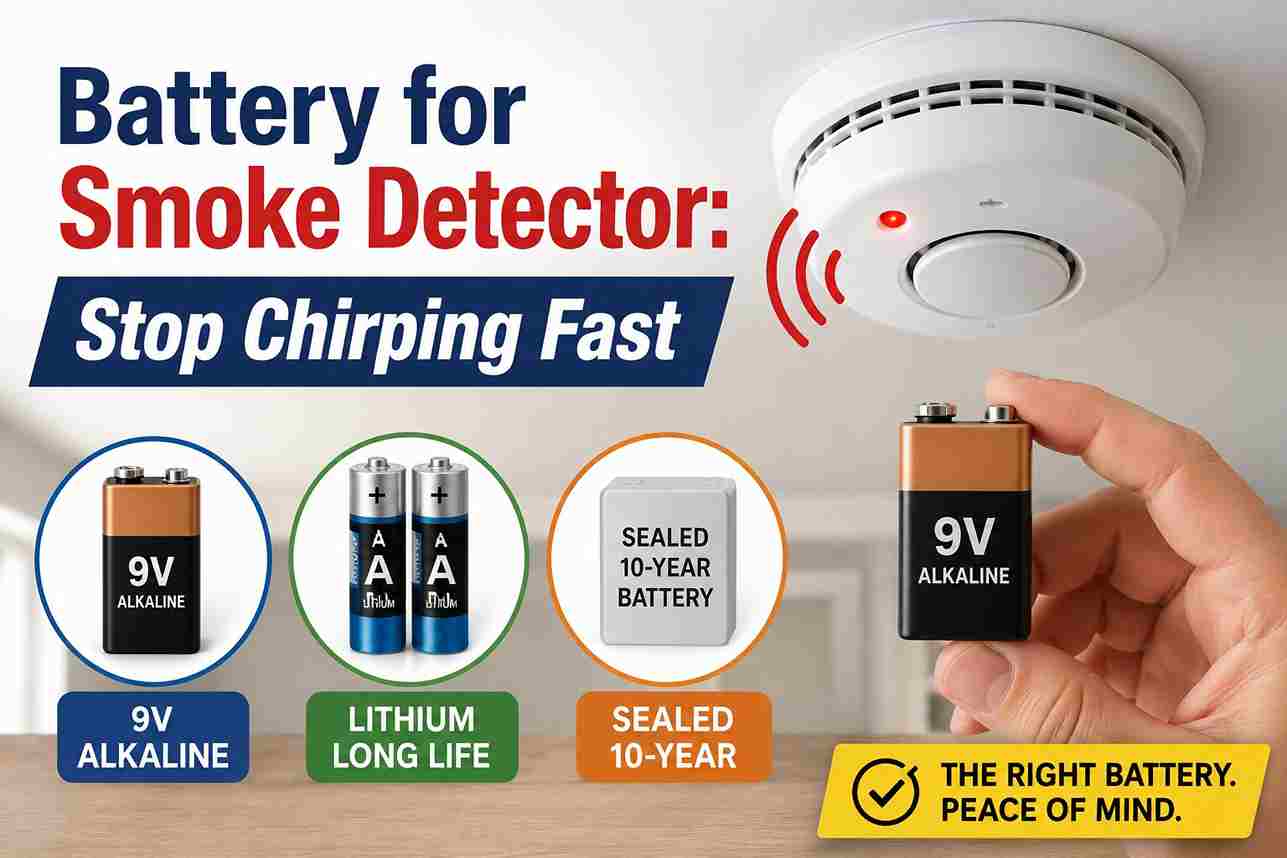
At 2:17 a.m., a smoke alarm suddenly begins chirping from the hallway, pulling a homeowner out of a deep sleep. After replacing what seems to be a dead battery in the smoke detector units, another question quickly follows: should it be replaced with a standard 9V battery, a lithium battery, or is the alarm designed to use a sealed 10-year power source? With so many smoke alarm models available today, choosing the right battery is not always as straightforward as it seems.
Many homeowners assume any replacement battery will work, but the type of battery installed can affect a smoke alarm’s reliability, maintenance requirements, and long-term operating costs. Since smoke alarms are designed to provide early warning during a fire, selecting the correct power source is important for keeping the device ready when it matters most.
Today’s smoke detectors use several different power systems. Older models commonly rely on replaceable 9V alkaline batteries, while many newer units use long-lasting lithium batteries or sealed 10-year batteries that never need replacement during the alarm’s lifetime. Each option offers different advantages depending on the detector’s design and the homeowner’s maintenance preferences.
This guide compares 9V, lithium, and sealed battery options, explains how each performs in everyday use, and helps you choose the best battery for smoke detector models based on reliability, lifespan, maintenance, and overall value.
Why Smoke Detector Batteries Matter More Than Most Homeowners Realize

Most people think about smoke detector batteries only when they hear a low-battery chirp. However, battery performance affects the detector every day, even when the home has electricity.
The Role Batteries Play During Power Failures
Many homes use hardwired smoke alarms connected directly to household electrical systems. Although these detectors receive constant power, they still include backup batteries.
During storms, electrical failures, or utility maintenance, the backup battery becomes the detector’s primary power source. If the battery has expired or weakened, protection may disappear exactly when it is needed most.
For example, severe weather events often cause outages lasting several hours. During those periods, a healthy battery ensures smoke alarms continue monitoring the home.
Battery-only smoke detectors depend entirely on battery health. Without a functioning battery, they simply cannot provide protection.
How Low Batteries Affect Detector Performance
Most homeowners recognize the familiar chirping sound that signals a low battery. Unfortunately, some people delay replacement for days or even weeks.
That delay creates unnecessary risk.
A weak battery may still power warning chirps while reducing overall reliability. Manufacturers design detectors to alert users before complete battery failure occurs, but ignoring those warnings removes an important layer of safety.
Consider a vacation property that sits empty for several weeks. A detector that began chirping shortly after the owner left may become completely inactive before anyone returns.
Understanding the Most Common Battery for Smoke Detector Models

Several battery types dominate today’s residential smoke alarm market. Each option offers distinct advantages and disadvantages.
Traditional 9V Batteries
For decades, the 9V battery was the standard choice for residential smoke alarms.
These batteries are compact, widely available, and easy to replace. Many older detectors still use them today.
Advantages include:
- Low purchase cost
- Easy availability
- Simple replacement process
- Compatibility with older detectors
However, there are drawbacks.
Most alkaline 9V batteries require annual replacement. Performance can also decline in extreme temperatures, making them less ideal for garages or seasonal properties.
Many homeowners still use a battery for smoke detector systems based on 9V technology because of its familiarity and low upfront cost.
AA Battery Smoke Detectors
Some manufacturers have moved away from 9V designs and instead use two or three AA batteries.
There are several reasons for this shift.
AA batteries often provide higher overall capacity. They are also easier for consumers to find in bulk packs and may offer longer operational life depending on detector design.
Common configurations include:
- Two AA alkaline batteries
- Three AA alkaline batteries
- AA lithium battery setups
Many modern smoke alarms use AA batteries because they balance affordability and performance effectively.
Lithium Battery Options
Lithium batteries have become increasingly popular in smoke detectors.
Unlike standard alkaline batteries, lithium cells offer:
- Longer service life
- Better cold-weather performance
- More stable voltage output
- Reduced maintenance requirements
For example, a lithium-powered smoke detector installed in a vacation cabin may continue operating reliably through freezing winter temperatures where alkaline batteries could struggle.
The tradeoff is cost. Lithium batteries generally cost more upfront than alkaline alternatives.
However, their extended lifespan often reduces replacement frequency enough to offset the higher purchase price.
9V vs Lithium Battery for Smoke Detector Performance

Choosing between traditional and lithium batteries requires looking beyond the sticker price.
Lifespan Comparison
Battery lifespan varies depending on detector design, environmental conditions, and usage patterns.
Typical expectations include:
- Alkaline 9V: 6–12 months
- AA alkaline: 12–24 months
- AA lithium: 5–10 years in some detectors
- Sealed lithium systems: up to 10 years
A homeowner replacing multiple 9V batteries every year may spend significantly more time on maintenance compared with someone using long-life lithium options.
This difference becomes especially noticeable in larger homes containing six or more smoke alarms.
Reliability During Temperature Changes
Temperature plays a major role in battery performance.
Hot attics, garages, and seasonal properties create conditions that challenge traditional alkaline batteries.
Lithium batteries generally handle:
- High summer temperatures
- Freezing winter conditions
- Rapid temperature swings
more effectively than standard alkaline batteries.
For example, a detached garage in Minnesota may experience temperatures well below freezing. Lithium batteries typically maintain more consistent performance in those conditions.
Long-Term Cost Analysis
The cheapest battery is not always the least expensive option over time.
Consider a detector requiring annual battery replacement:
- One alkaline 9V battery costs approximately $4.
- Over 10 years, replacement costs total around $40.
- Additional time and maintenance are required.
By comparison:
- A long-life lithium battery may cost $15–20 initially.
- Replacement frequency is dramatically reduced.
When evaluating a battery for smoke detector applications, total ownership cost often matters more than purchase price alone.
| Battery Type | Average Lifespan | Approximate Cost | Maintenance Frequency |
| 9V Alkaline | 6–12 months | $3–$6 | High |
| AA Alkaline | 1–2 years | $4–$8 | Moderate |
| AA Lithium | 5–10 years | $12–$20 | Low |
| Sealed Lithium | Up to 10 years | Included in detector | Very Low |
Sealed 10-Year Smoke Detectors Explained

One of the biggest changes in residential fire safety has been the growing adoption of sealed battery smoke alarms.
What Is a Sealed Battery Smoke Detector?
A sealed smoke detector contains a non-removable lithium battery permanently installed by the manufacturer.
The battery is designed to power the detector throughout its expected service life, which is typically ten years.
Once the battery reaches end of life, the entire smoke alarm is replaced.
These systems eliminate annual battery changes.
Why Building Codes Are Favoring Sealed Models
Several jurisdictions have updated residential fire safety requirements to encourage or require sealed battery detectors.
The reason is simple.
Many smoke alarms fail because homeowners remove batteries and forget to replace them.
A sealed detector prevents:
- Battery removal
- Improper battery replacement
- Missing batteries
- Delayed maintenance
As a result, overall detector reliability improves.
Advantages of Sealed Designs
Sealed battery smoke detectors offer several benefits.
First, maintenance becomes much simpler. Homeowners no longer need to remember annual battery replacement schedules.
Second, reliability improves because the detector always contains a compatible power source.
Third, sealed models reduce the likelihood of disabled alarms caused by removed batteries.
For busy households, these advantages can be significant.
Potential Disadvantages
Sealed models are not perfect.
The most obvious drawback is replacement cost.
When the battery reaches end of life, the entire detector must be replaced even if the sensing components still appear functional.
Other considerations include:
- Higher initial purchase price
- Complete unit replacement requirements
- Limited battery servicing options
Despite these limitations, many fire safety professionals consider sealed lithium detectors the most reliable choice for residential use.
Which Battery for Smoke Detector Is Best for Different Homes?

The ideal solution depends on the type of home and the people living in it.
Apartment Owners
Apartment residents often benefit from sealed lithium detectors.
Maintenance is minimal, and space constraints make convenience especially valuable.
Large Single-Family Homes
Homes with six to ten smoke alarms can become expensive and time-consuming to maintain using annual battery replacements.
In these situations, long-life lithium or sealed systems frequently provide the best balance of cost and convenience.
Rental Properties
Landlords often prefer sealed detectors because they reduce maintenance visits and help ensure batteries remain installed.
Tenant compliance issues are also reduced significantly.
Vacation Homes
Vacation properties present unique challenges because they may remain unoccupied for weeks or months at a time.
A traditional alkaline battery for smoke detector units can lose power while nobody is present to hear low-battery warnings. That situation creates a serious risk because the detector may become inactive long before the owner returns.
For cabins, seasonal homes, and vacation rentals, lithium-powered or sealed 10-year detectors are usually the better option. Their extended lifespan reduces maintenance requirements and improves reliability during long periods of absence.
Elderly Homeowners
For older adults, climbing ladders to replace batteries can become difficult or unsafe.
A sealed detector eliminates yearly battery replacement and reduces the likelihood of maintenance being postponed. Family members and caregivers often recommend sealed units because they simplify fire safety while maintaining dependable protection.
In many cases, a sealed detector offers the best combination of convenience and safety for aging homeowners.
Common Mistakes When Replacing Smoke Detector Batteries

Many smoke alarm problems are caused not by the detector itself but by simple maintenance mistakes.
Mixing Battery Types
Some homeowners replace only one battery in a multi-battery detector or combine different battery brands and chemistries.
For example:
- One old battery and one new battery
- One alkaline and one lithium battery
- Two different battery brands with different charge levels
This can affect performance and shorten battery life.
Always replace all batteries at the same time and use the type specified by the manufacturer.
Using Expired Batteries
Batteries have shelf-life dates for a reason.
A battery that has been sitting in a garage for several years may already have reduced capacity before installation.
Before replacing a battery for smoke detector systems, check the packaging date and use fresh batteries whenever possible.
Ignoring Manufacturer Requirements
Not every smoke alarm supports every battery type.
Some homeowners assume a lithium battery is automatically better and install one even when the manufacturer specifies alkaline batteries.
Always follow the detector’s documentation. Using unsupported batteries may affect performance or void warranties.
Forgetting to Test After Replacement
Battery replacement should always be followed by testing.
Press the test button and confirm:
- The alarm sounds correctly.
- Indicator lights function normally.
- No warning chirps remain.
This simple step takes less than a minute but confirms the detector is operating properly.
Signs Your Smoke Detector Battery Needs Attention

Smoke alarms often provide warnings before complete battery failure occurs.
Recognizing those signs helps prevent unexpected loss of protection.
Chirping Sounds
The most common warning sign is periodic chirping.
Many detectors emit a short chirp every 30 to 60 seconds when battery voltage drops below a specific threshold.
If chirping begins, replace the battery promptly rather than waiting until later.
Low Battery Warning Indicators
Modern detectors frequently include LED indicators.
Common signs include:
- Flashing amber lights
- Low battery icons
- Mobile app notifications
- Voice warnings
Smart smoke alarms may send alerts directly to a smartphone, making it easier to identify issues quickly.
Random False Alarms
A weak battery can sometimes contribute to unpredictable behavior.
Although false alarms may also result from dust, humidity, or aging sensors, battery condition should be one of the first things checked during troubleshooting.
Detector Age Concerns
The detector itself has a limited lifespan.
Most manufacturers recommend replacing smoke alarms approximately every 10 years.
Even with a fresh battery for smoke detector operation, an aging sensor may no longer perform as accurately as intended.
If the manufacturing date exceeds the recommended service life, replacement should be considered.
Maintenance Tips to Extend Smoke Detector Reliability

A smoke detector requires very little maintenance, but regular attention improves long-term reliability.
Monthly Testing
Most fire safety organizations recommend testing alarms every month.
Press the test button and verify:
- The alarm sounds loudly.
- Indicator lights function correctly.
- Connected units communicate properly.
Monthly testing helps identify issues before an emergency occurs.
Annual Cleaning
Dust buildup can affect sensor performance.
At least once each year:
- Vacuum around detector vents.
- Remove surface dust.
- Inspect for insects or debris.
Cleaning helps reduce nuisance alarms and improves reliability.
Scheduled Battery Replacement
For replaceable-battery models, establish a schedule instead of waiting for warning chirps.
Many homeowners replace batteries:
- Once per year
- During daylight saving time changes
- During annual home maintenance checks
A proactive schedule helps ensure every battery for smoke detector systems remains dependable.
End-of-Life Detector Replacement
Replacing batteries is only part of maintenance.
The detector itself eventually reaches the end of its service life.
Most manufacturers recommend replacement after 10 years because sensing components degrade over time.
Smoke Detector Maintenance Checklist
Monthly:
- Test every detector.
- Check indicator lights.
Every 6 Months:
- Inspect for dust buildup.
- Verify detector placement remains unobstructed.
Annually:
- Clean detectors thoroughly.
- Replace batteries if required.
Every 10 Years:
- Replace the entire detector.
What Fire Safety Organizations Recommend

Fire safety organizations around the world consistently emphasize four key practices.
Regular Testing
Testing confirms detectors can still produce a warning signal.
A battery may appear functional while another component has developed a problem.
Regular testing helps identify these issues.
Battery Replacement Schedules
Organizations generally recommend following manufacturer guidance rather than relying solely on warning chirps.
Scheduled maintenance improves reliability and reduces the chance of unexpected failures.
Detector Replacement Timelines
Most recommendations suggest replacing smoke alarms after approximately 10 years.
Even if the detector appears functional, sensor performance may decline with age.
Proper Placement
Detector placement matters just as much as battery selection.
Most guidelines recommend installation:
- Inside bedrooms
- Outside sleeping areas
- On every level of the home
Proper placement increases the likelihood that occupants receive early warning during a fire.
FAQ
1. How often should I replace a battery for smoke detector systems?
The answer depends on battery type and manufacturer recommendations. Traditional alkaline batteries often require annual replacement, while lithium batteries may last several years.
2. Are lithium batteries worth the extra cost?
For many homeowners, yes. Lithium batteries generally last longer, perform better in temperature extremes, and require less maintenance.
3. Can I use rechargeable batteries in smoke alarms?
Most manufacturers discourage rechargeable batteries because voltage characteristics may differ from standard batteries. Always follow the detector manufacturer’s instructions.
4. Why is my smoke detector chirping after a battery replacement?
Possible causes include incorrect battery installation, expired batteries, dust buildup, or an aging detector that requires replacement.
5. Do hardwired detectors need batteries?
Yes. Most hardwired smoke alarms contain backup batteries that protect during power outages.
6. Are sealed smoke detectors better?
Sealed detectors offer significant convenience and reduce maintenance. They also prevent battery removal, which improves reliability.
7. How long do 9V batteries last in smoke alarms?
Many 9V batteries last between six months and one year depending on detector design, environmental conditions, and battery quality.
8. When should an entire smoke detector be replaced?
Most manufacturers recommend replacing smoke alarms every 10 years regardless of battery condition.
Conclusion
Choosing the right smoke detector power source involves more than comparing battery prices. Reliability, maintenance requirements, environmental conditions, and homeowner lifestyle all influence the best choice.
Traditional 9V batteries remain affordable and widely available, but they require regular replacement. Lithium batteries offer longer service life and better performance in challenging environments. Meanwhile, sealed 10-year detectors provide the lowest maintenance option and are increasingly favored by building codes and fire safety professionals.
For most homeowners, the best approach is simple. Check your detector manufacturer’s recommendations, evaluate how often you’re willing to perform maintenance, and prioritize reliability over small upfront savings. Whether you choose a lithium-powered model, a traditional alarm, or a sealed unit, selecting the right battery for smoke detector protection helps ensure your home remains prepared when every second counts.



Leave a Reply