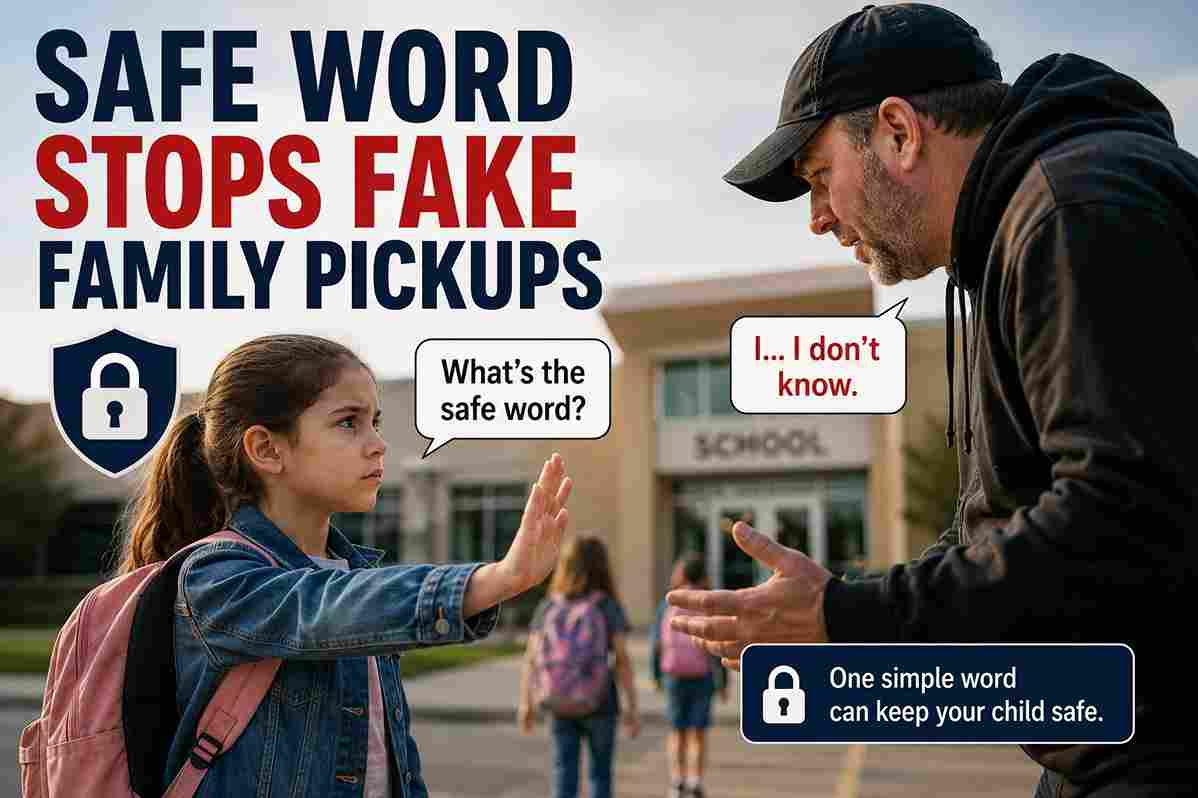
A child is waiting outside school when a familiar-looking adult arrives and says, “Your mom asked me to pick you up.” The person knows the child’s name. They seem trustworthy. Yet the child hesitates and asks one simple question: “What’s the safe word?”
The adult cannot answer.
That brief exchange could prevent a dangerous situation.
While technology dominates modern security discussions, many families are rediscovering a surprisingly simple protection tool that requires no app, subscription, or device. A shared family code word can help verify identities, prevent manipulation, and improve communication during emergencies.
Law enforcement agencies, child safety organizations, and emergency preparedness experts have recommended family code words for decades. Now, with rising concerns about impersonation scams, AI-generated voices, and social engineering tactics, this forgotten practice is making a strong comeback.
Understanding how it works—and how to use it effectively—can add an extra layer of protection to your household.
What Is a Safe Word and Why Does It Matter?

A family safe word is a secret word or phrase known only to trusted family members and a small circle of approved individuals. Its purpose is simple: verify that a person or message is legitimate.
Unlike passwords used online, family code words are designed for real-world situations. They help children identify trusted adults, confirm emergency instructions, and avoid manipulation attempts.
Imagine a babysitter receives a text claiming a parent is stuck in traffic and has sent a neighbor to pick up the children. Before agreeing, the babysitter asks for the family code word. If the correct phrase is provided, confidence increases. If not, caution is warranted.
The value of this practice lies in its simplicity. It creates a verification step that criminals, strangers, or scammers may struggle to bypass.
For children, the concept is especially powerful because it gives them a clear rule to follow instead of expecting them to judge complicated situations on their own.
The History Behind Family Code Words

Family code words are not a new idea.
During the late twentieth century, many schools, law enforcement departments, and child safety programs encouraged parents to establish secret verification words with their children. The goal was straightforward: prevent abductions and unauthorized pickups.
Community safety campaigns often taught children never to leave with an adult unless that person knew the family’s secret code.
Over time, however, smartphones became common. Parents could call or text instantly, leading many households to abandon older safety practices.
Today, experts are recognizing a new challenge. Technology has created additional risks. Scammers can spoof phone numbers. Social media reveals personal information. Artificial intelligence can imitate voices. These developments have renewed interest in simple verification methods that are difficult for strangers to predict.
As a result, family code words are returning to emergency preparedness discussions across schools, community organizations, and parenting groups.
Why More Families Are Using a Safe Word Again

Several modern threats have contributed to renewed interest in family verification systems.
Rising Concerns About Scams and Impersonation
Criminals increasingly rely on social engineering rather than physical force. They gather information from social media profiles, public records, and online conversations to appear trustworthy.
The FBI and cybersecurity experts regularly warn about impersonation scams that exploit familiarity and urgency. A caller might pretend to be a relative, a school representative, or a friend in need.
A shared safe word introduces an immediate verification step. Even if a scammer knows names, addresses, and personal details, they are unlikely to know a private family phrase.
Child Safety in Everyday Situations
Most families focus on rare emergencies, but everyday situations often create confusion.
Examples include:
- Unexpected school pickups
- Sports practice transportation changes
- Babysitter substitutions
- Family friend assistance
- Emergency childcare arrangements
Children may feel pressured to comply with adults who appear authoritative.
Teaching them to ask for a verification phrase provides a simple decision-making tool. Instead of evaluating whether an adult seems trustworthy, they only need to remember one rule.
Emergency Communication Challenges
Emergencies rarely unfold according to plan.
A parent may lose access to a phone, experience a vehicle breakdown, or become temporarily unreachable. In stressful situations, normal communication channels can fail.
A family safe word helps maintain trust when circumstances become chaotic. It allows authorized individuals to verify instructions even when direct contact with parents is impossible.
How a Safe Word Works in Real Life

The effectiveness of a family code word becomes clearer when viewed through practical examples.
School Pickup Scenarios
A mother is delayed by a highway accident and cannot reach school before dismissal.
She contacts a trusted neighbor and asks them to collect her son.
When the neighbor arrives, the child asks for the agreed family code word. The neighbor provides it correctly, confirming the arrangement.
Without that verification step, the child would have to rely entirely on appearances and trust.
Emergency Phone Calls
A teenager receives a phone call claiming a parent has been injured and needs immediate financial assistance.
The caller sounds convincing and provides personal details.
Instead of reacting emotionally, the teenager asks for the family code phrase.
The caller becomes evasive.
The conversation ends, potentially preventing financial fraud.
Online Safety Situations Using a safe word
Digital communication creates opportunities for confusion and deception.
Suppose a family member receives a message from a social media account that appears to belong to a relative. The account requests sensitive information or asks for urgent help.
Before responding, the recipient requests the family verification phrase.
The inability to provide it immediately raises a red flag and encourages additional verification.
Choosing the Right Safe Word

The effectiveness of the system depends heavily on selecting the right phrase.
Characteristics of a Strong Safe Word
A good family code word should be:
- Easy for children to remember
- Difficult for outsiders to guess
- Unrelated to public information
- Simple to pronounce
- Memorable under stress
Unusual words often work well.
Examples include:
- BlueCactus
- MangoRocket
- PurpleOtter
- SilverPineapple
- ThunderWaffle
Combining unrelated words increases memorability while reducing predictability.
Common Mistakes to Avoid
Many families unintentionally weaken their security by choosing obvious phrases.
Avoid:
- Pet names visible on social media
- Birthdays
- Street names
- School names
- Sports team names
- Common passwords
Another mistake is sharing the phrase too widely.
Only trusted individuals who may legitimately need it should know the code.
Finally, avoid changing the code too frequently. Children may struggle to remember frequent updates, especially during stressful situations.
How to Introduce a Safe Word to Children

The concept should be presented in a calm and empowering way.
Children should view it as a helpful tool rather than something frightening.
Age-Appropriate Explanations
For younger children:
“Sometimes plans change. If another grown-up ever comes to get you, ask them for our special family word first.”
For older children:
“People can sometimes pretend to know our family. The code helps verify that someone is truly acting with our permission.”
Keep explanations simple and practical.
Avoid overwhelming children with detailed discussions about crime or worst-case scenarios.
Practice Exercises
Practice is essential.
Consider role-playing situations such as:
- School pickup changes
- Emergency transportation
- Phone calls from unknown people
- Messages claiming to be from relatives
Children remember procedures better when they rehearse them.
Short monthly practice sessions can significantly improve recall during real situations.
Safe Word Ideas for Families

Many families struggle to create a memorable phrase.
The best choices are unusual combinations that are easy to recall but difficult to predict.
Examples include:
- DancingBanana
- RocketPancake
- SunnyWalrus
- FlyingMarshmallow
- CrystalTurtle
- RainbowCompass
- GoldenAcorn
- ArcticMango
- VelvetFalcon
- PineappleMeteor
Some families prefer short phrases instead of single words.
Examples:
- Purple moonlight
- Hidden waterfall
- Quiet thunder
- Silver bicycle
- Happy volcano
Whichever option you choose, ensure every authorized person understands the exact wording.
Consistency matters.
Integrating a Safe Word Into a Home Security Plan

A family code word works best when combined with broader safety measures.
Family Emergency Plans
Every household should maintain a basic emergency communication strategy.
This plan can include:
- Emergency contact lists
- Meeting locations
- School procedures
- Trusted pickup alternatives
- Medical information
A safe word strengthens these plans by providing a verification mechanism whenever unexpected changes occur.
Think of it as one layer within a larger protection system.
Digital Security and Verification
Modern threats increasingly occur online.
Families should consider using verification phrases during situations involving:
- Account recovery requests
- Emergency money requests
- Suspicious phone calls
- Unexpected messages
- Identity verification conversations
Although digital security tools remain important, human verification procedures add another valuable layer.
Travel and Public Outings
Family trips often involve crowded environments where communication can become difficult.
Before traveling, discuss:
- Meeting points
- Emergency contacts
- Trusted adults
- Verification procedures
A shared safe word can help children identify legitimate assistance if they become separated from parents in unfamiliar surroundings.
Common Myths About Safe Words

Several misconceptions discourage families from adopting this practice.
Myth 1: Only Families With Young Children Need Them
Teenagers, college students, and adults can also benefit.
Verification systems help prevent impersonation scams targeting all age groups.
Myth 2: Smartphones Make Them Obsolete
Phones improve communication but do not eliminate deception.
Scammers can spoof numbers, clone accounts, and imitate voices.
Verification remains valuable.
Myth 3: They Are Difficult to Remember
Most families quickly memorize a simple phrase after a few practice sessions.
Children often remember unusual words surprisingly well.
Myth 4: Criminals Could Guess Them Easily
Strong phrases are highly difficult to predict, especially when unrelated to publicly available information.
Myth 5: One Conversation Is Enough
Like fire drills, security procedures require occasional review.
Regular practice improves confidence and recall.
Step-by-Step Family Implementation Plan

Creating an effective verification system takes only a few minutes.
Step 1: Select a Unique Phrase
Choose a memorable code that avoids obvious personal details.
Step 2: Limit Distribution
Share it only with immediate family members and trusted adults who may need it.
Step 3: Explain Its Purpose
Ensure everyone understands when and why the phrase should be used.
Step 4: Practice Realistic Scenarios
Role-play school pickups, emergency calls, and transportation changes.
Step 5: Document Trusted Contacts
Maintain a list of authorized individuals who may legitimately use the phrase.
Step 6: Review Annually
Evaluate whether the code remains private and effective.
Step 7: Reinforce Consistently
Brief refreshers help family members remember procedures during stressful situations.
Frequently Asked Questions

What age should children learn a family code word?
Most children can understand the concept between ages four and six. Use simple explanations and practice regularly.
How often should we change our safe word?
Annual reviews are usually sufficient unless the phrase has been widely shared or potentially exposed.
Should schools know our family code phrase?
Schools generally do not need the phrase itself. However, they should understand your authorized pickup procedures.
Can adults use family verification words too?
Absolutely. Many scams specifically target adults. Verification systems can help confirm identities during unusual requests.
What if a child forgets the phrase?
Regular practice dramatically reduces this risk. Monthly reviews are usually enough to maintain recall.
Should we use the same phrase for online and offline situations?
Many families do, although some prefer separate verification methods for digital communication.
Is a family code word enough by itself?
No. It works best as part of a broader safety strategy that includes communication plans, cybersecurity practices, emergency preparedness, and situational awareness.
Conclusion
Many security measures require expensive equipment, technical knowledge, or ongoing maintenance. Family verification phrases are different. They cost nothing, take minutes to establish, and can provide meaningful protection during uncertain situations.
The growing popularity of family code words reflects a broader lesson: sometimes the most effective safety practices are also the simplest. A private phrase can help children verify trusted adults, assist families during emergencies, and reduce the risk of impersonation scams.
The next steps are straightforward. Choose a phrase this week, share it only with trusted individuals, practice a few realistic scenarios, and include it in your household emergency plan. Small preparations made today can create greater confidence and security when unexpected situations arise tomorrow.

Leave a Reply