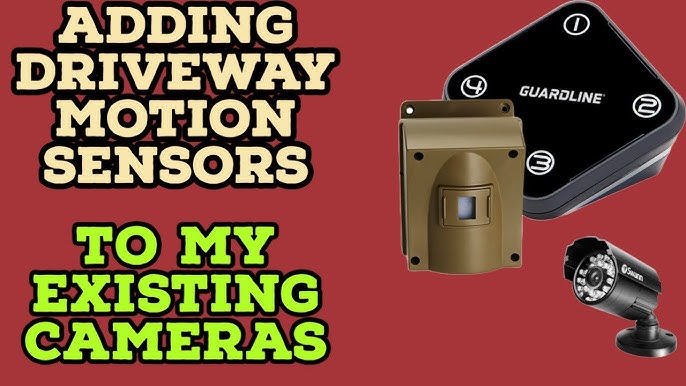
A homeowner hears a vehicle enter the driveway at 2:17 a.m. but receives no phone notification or Driveway Alarm alert. By the time the security camera records movement near the garage, someone has already crossed half the property. The footage is clear, but the warning arrived late. In a real security event, those extra seconds could make a significant difference.
This scenario highlights a common misunderstanding in residential security. Many homeowners assume that installing a security camera automatically provides the earliest possible warning. In reality, video quality and detection speed are two different things. A camera may capture excellent evidence while still detecting activity only after someone has already entered the property.
That is where the comparison between a Driveway Alarm and a security camera becomes important. A Driveway Alarm is designed to provide immediate awareness when someone or something enters a monitored area, while a security camera focuses on recording and verifying what happened. Understanding the strengths and limitations of each system can help homeowners choose the right solution for their property.
This guide explains how Driveway Alarms and security cameras work, compares their detection speed, accuracy, costs, and real-world performance, and helps determine whether using one—or combining both—offers the strongest protection for your home.
Why Early Intruder Detection Matters

Most property crimes do not begin at the front door. They start when someone enters the property, studies the surroundings, and decides whether the home presents an easy target. The earlier a homeowner becomes aware of that activity, the more options they have.
The First Few Seconds Often Matter Most
Many homeowners focus on preventing break-ins. However, detecting suspicious activity before an attempted break-in is often even more valuable.
Consider a few examples:
- A vehicle slowly enters a rural driveway after midnight.
- Someone walks toward a detached garage.
- A stranger approaches a package left near the front door.
- An individual surveys the property before deciding whether to continue.
In each case, early awareness provides valuable reaction time.
A homeowner may turn on exterior lights, check a live camera feed, activate two-way audio, contact neighbors, or call law enforcement if necessary. Those actions become much harder if the first alert arrives after the person has already reached the house.
Delayed Detection Reduces Response Time
Most people do not instantly react to notifications. Studies on human response behavior show that even when notifications are noticed immediately, users often need several seconds to assess the information and decide what action to take.
Now imagine an intruder moving across a property.
A person walking at a moderate pace covers approximately 4 to 5 feet per second. On a smaller suburban property, an individual can move from the sidewalk to the front door in less than 30 seconds.
If a security system detects activity 15 seconds later than another system, that difference can be substantial.
This is why security professionals often prioritize detection timing over image quality when discussing perimeter protection.
How a Driveway Alarm Works

A driveway alarm is designed for one primary purpose: notifying homeowners as soon as movement enters a monitored area. Unlike cameras, which focus on recording and verification, alarms focus on awareness.
Motion-Based Driveway Alarm Systems
The most common systems use passive infrared (PIR) sensors.
These sensors detect heat signatures moving across their field of view. When a person, vehicle, or large animal passes through the monitored area, the sensor sends a signal to a receiver located inside the home.
Typical detection ranges include:
- 30 feet
- 50 feet
- 100 feet
- Up to 400 feet for premium models
Common uses include:
- Driveway entrances
- Front gates
- Long private roads
- Detached garages
- Barns and workshops
The biggest advantage is speed. Many PIR systems trigger almost immediately after motion is detected.
Magnetic Probe Driveway Alarm Systems
Magnetic probe systems operate differently.
Instead of detecting motion, they detect changes in the earth’s magnetic field caused by large metal objects such as vehicles.
A probe is buried underground near the driveway entrance. When a vehicle passes over or near the sensor, the system sends an alert.
Benefits include:
- Fewer false alarms
- Excellent vehicle detection
- Better performance during adverse weather
- Hidden installation
For homeowners primarily concerned about vehicle traffic, magnetic systems often outperform standard motion sensors.
Wireless vs Wired Systems
Both wired and wireless systems remain popular.
| Feature | Wireless Systems | Wired Systems |
| Installation Difficulty | Easy | Moderate |
| Expansion | Simple | More complex |
| Reliability | Good | Excellent |
| Maintenance | Battery replacement | Minimal |
| Cost | Lower upfront | Higher upfront |
| Best For | Most homeowners | Permanent installations |
Wireless systems dominate the residential market because installation typically requires only a few minutes.
However, wired systems often provide greater long-term reliability in demanding environments.
How Security Cameras Detect Activity

Unlike alarms, security cameras combine detection and visual evidence.
Modern cameras have improved dramatically over the past decade. Many now use artificial intelligence to distinguish between people, vehicles, animals, and general movement.
Motion Detection Technology
Traditional cameras detect activity by analyzing changes between video frames.
When enough pixels change, the system assumes motion has occurred.
This approach works well but can also generate false alerts.
Common triggers include:
- Moving tree branches
- Headlights
- Shadows
- Rain
- Snow
- Insects near the lens
As a result, motion detection alone is rarely ideal for early warning.
AI Person Detection
Many newer cameras use AI-based object recognition.
Instead of responding to every movement, the camera identifies specific objects.
Examples include:
- People
- Vehicles
- Animals
- Packages
This technology dramatically reduces unnecessary alerts.
For example, a camera overlooking a busy street might generate hundreds of standard motion alerts daily. AI filtering may reduce those notifications to only a few relevant events.
Vehicle Detection Features
Vehicle recognition has become increasingly important.
Many systems can now distinguish between:
- Parked vehicles
- Moving vehicles
- Delivery trucks
- Regular traffic
This improves notification quality and helps homeowners focus on events that matter.
Smart Notifications
Most modern cameras connect directly to smartphones.
Notifications may include:
- Snapshot previews
- Video clips
- Live-view links
- Person detection alerts
- Package detection alerts
These features provide context that alarms cannot. However, they also depend heavily on internet connectivity, cloud processing, and application performance.
(Continue with Part 2 covering detection speed comparison, real-world testing, cost analysis, false alerts, and final recommendations.)
Driveway Alarm vs Camera Detection Speed

Detection speed is where the comparison becomes especially interesting. Many homeowners assume cameras always provide the fastest warning because they are more technologically advanced. In practice, the answer depends on property layout, internet connectivity, and the type of threat being detected.
A driveway alarm is designed to alert homeowners immediately when movement reaches a monitored area. Cameras, on the other hand, must first detect activity, process the event, and then send a notification.
The difference may only be a few seconds, but those seconds matter.
| Factor | Driveway Alarm | Security Camera |
| Detection Distance | Often 50–400+ feet from home | Usually limited by camera placement |
| Alert Speed | Near-instant local alert | Often 2–15 seconds |
| Night Performance | Consistent | Depends on lighting and night vision |
| Weather Resistance | Generally reliable | May be affected by rain, fog, or glare |
| Internet Dependency | Often none | Usually required for alerts |
| False Alerts | Moderate depending on setup | Higher without AI filtering |
| Visual Evidence | No | Yes |
| Verification Capability | No | Yes |
Imagine a 300-foot rural driveway.
A sensor installed near the entrance may alert the homeowner as soon as a vehicle enters the property. A camera mounted near the garage may not trigger until the vehicle has already traveled most of the driveway.
In this situation, the alarm provides earlier awareness while the camera provides visual confirmation.
For smaller suburban properties, however, the timing difference may be much smaller.
Where a Driveway Alarm Performs Better

Although cameras receive more attention in the smart home market, there are situations where a driveway alarm clearly has the advantage.
Long Rural Driveways
Rural properties often have driveways ranging from 200 feet to over 1,000 feet.
Covering those distances with cameras can be expensive.
For example:
- A 600-foot driveway may require multiple cameras.
- Power and internet access become challenges.
- Nighttime visibility decreases over distance.
A sensor placed near the entrance solves these issues by notifying the homeowner the moment a vehicle arrives.
Many rural property owners consider this one of the most valuable security upgrades available.
Heavy Tree Coverage
Cameras depend on clear visibility.
Wooded properties introduce challenges such as:
- Dense foliage.
- Shadows.
- Seasonal vegetation growth.
- Limited sunlight.
Motion sensors often continue working effectively even when visibility conditions are less than ideal.
Areas With Limited Internet
Some properties lack reliable broadband service.
Since many cameras rely on cloud processing, connectivity problems may delay alerts.
A driveway alarm receiver operating through radio frequency communication can continue functioning without internet access.
For cabins, farms, and remote vacation homes, this advantage can be significant.
Early Vehicle Detection
Vehicle detection remains one of the strongest arguments for dedicated alarm systems.
A magnetic probe installed at a driveway entrance often detects vehicles before they become visible on cameras positioned near the home.
This extra warning time allows homeowners to:
- Check camera feeds.
- Turn on exterior lighting.
- Monitor visitor behavior.
- Prepare for expected deliveries.
Where Security Cameras Perform Better

Detection speed is only one part of security.
Once activity occurs, cameras provide information that alarms simply cannot.
Evidence Collection
If a suspicious event occurs, recorded footage becomes valuable evidence.
Video can capture:
- Vehicle descriptions.
- Clothing details.
- Direction of travel.
- Time stamps.
- License plates under favorable conditions.
An alarm may tell you something happened.
A camera often shows exactly what happened.
Facial Recognition Possibilities
Some advanced systems can recognize familiar individuals.
Depending on the platform, homeowners may receive notifications such as:
- Family member detected.
- Known visitor detected.
- Unknown person detected.
While these systems are not perfect, they can improve situational awareness.
Package Theft Monitoring
Package theft continues to be one of the most common residential security concerns.
Cameras perform particularly well here because they provide:
- Visual verification.
- Recorded evidence.
- Delivery confirmation.
- Live viewing capabilities.
A driveway sensor may indicate someone arrived, but it cannot show whether a package was delivered or stolen.
Remote Viewing
One of the biggest strengths of modern cameras is remote access.
Homeowners can:
- View live video.
- Review recorded footage.
- Speak through two-way audio.
- Check multiple locations simultaneously.
This capability becomes especially valuable during travel.
Price Comparison

Cost plays a major role in purchasing decisions.
The following ranges represent typical homeowner expenses.
| Feature | Driveway Alarm | Security Camera |
| Equipment Cost | $40–$300 | $60–$500+ |
| Professional Installation | $0–$500 | $100–$1,000+ |
| Subscription Fees | Usually none | Often $3–$20/month |
| Maintenance | Low | Moderate |
| Battery Replacement | Occasionally | Occasionally |
| Cloud Storage Costs | None | Common |
| Five-Year Ownership Cost | Lower | Often higher |
For homeowners seeking affordable early detection, alarms frequently provide better value.
For homeowners prioritizing evidence and monitoring, cameras often justify their higher costs.
Choosing the Right System for Your Property
The best home security system depends on your property size, layout, budget, and security goals. A system that works perfectly for a suburban home may not provide adequate protection for a rural property with a quarter-mile driveway.
Instead of asking which technology is universally better, focus on which one addresses the risks most relevant to your situation.
Small Suburban Homes

Most suburban homes have shorter driveways, nearby neighbors, and reliable internet access.
In these environments, a quality security camera system often provides sufficient coverage because:
- Detection distances are relatively short.
- Visitors reach the front door quickly.
- Video evidence is valuable for package theft investigations.
- Smart notifications can be delivered almost instantly.
However, homeowners who frequently miss delivery drivers or unexpected visitors may still benefit from adding a driveway entrance sensor.
Recommended setup:
- Video doorbell.
- Front yard camera.
- Smart lighting.
- Optional driveway sensor for additional awareness.
Rural Properties

Rural properties often benefit the most from a driveway alarm because early detection becomes much more important as property size increases.
Consider a property with:
- A 500-foot driveway.
- Limited street visibility.
- Detached garages.
- Multiple outbuildings.
A camera mounted near the house may not detect a vehicle until it is already close to the residence. A driveway sensor positioned near the entrance provides valuable advance notice.
Recommended setup:
- Driveway entrance sensor.
- Exterior cameras near structures.
- Motion-activated lighting.
- Alarm system protecting entry points.
Large Acreage Homes
Large properties present unique monitoring challenges.
Some homeowners attempt to cover long distances entirely with cameras. While possible, costs can increase quickly due to:
- Additional cameras.
- Power requirements.
- Network infrastructure.
- Maintenance needs.
In many cases, combining sensors and cameras produces better results.
Recommended setup:
- Multiple perimeter sensors.
- Cameras at key access points.
- Smart lighting zones.
- Centralized notification management.
This layered approach helps maintain coverage without excessive equipment costs.
Vacation Properties

Vacation homes are often unoccupied for extended periods.
For these properties, remote awareness becomes especially important.
Recommended setup:
- Camera system with cloud storage.
- Entrance detection sensors.
- Cellular backup connectivity.
- Remote monitoring capabilities.
A sensor can provide immediate notice of activity, while cameras allow owners to verify events from anywhere.
FAQ
1. Is a driveway alarm better than a camera?
Neither is universally better. A driveway alarm typically provides earlier notification when someone enters the property, while cameras provide visual evidence and remote monitoring. For most homeowners, combining both technologies delivers the best results.
2. How far can a driveway alarm detect vehicles?
Detection range varies by model. Entry-level systems may detect activity within 30 to 50 feet, while premium systems can monitor distances exceeding 400 feet. Magnetic probe systems can also detect vehicles reliably at driveway entrances without relying on visual conditions.
3. Do driveway alarms work at night?
Yes. Most sensors operate independently of visible light, making nighttime performance one of their strongest advantages. Unlike cameras that depend on night vision quality, sensors generally maintain consistent detection capabilities after dark.
4. Can security cameras provide early warnings?
Yes, but effectiveness depends on placement and technology. Cameras equipped with person detection, vehicle recognition, and smart notifications can provide timely alerts. However, detection often occurs closer to the home compared to perimeter sensors installed near driveway entrances.
5. Are driveway alarms worth it?
For many homeowners, especially those with longer driveways, driveway alarms can be extremely valuable. The ability to receive notification several seconds before someone reaches the home often improves awareness and response time.
6. Which system has fewer false alerts?
The answer depends on configuration. Poorly positioned motion sensors may react to wildlife, while improperly configured cameras may respond to shadows, rain, or headlights. Modern AI cameras and magnetic vehicle sensors generally offer the best false-alert performance.
7. Do I need internet for a driveway alarm?
Most traditional systems do not require internet access. Many use radio-frequency communication between the sensor and indoor receiver. This makes them useful for remote properties where broadband service is unreliable.
8. Can both systems work together?
Absolutely. In fact, many professional security installers recommend using both. The sensor provides early detection, while the camera supplies visual verification and recorded evidence. Together, they address different parts of the security process.
Conclusion
After comparing detection speed, reliability, installation requirements, false alerts, and long-term costs, a clear pattern emerges.
If the goal is receiving the earliest possible warning that someone has entered the property, a driveway alarm often performs better. Sensors placed near driveway entrances can provide valuable extra seconds or even minutes of awareness, particularly on larger properties.
If the goal is identifying visitors, collecting evidence, monitoring deliveries, and viewing activity remotely, security cameras remain the stronger option. Their ability to record events and provide visual context makes them an essential part of modern home security.
For many homeowners, the most effective solution is not choosing one over the other. It is combining both technologies into a layered security strategy. The alarm notifies you that something is happening, while the camera shows you exactly what is happening.
Before purchasing equipment, evaluate your driveway length, internet reliability, property layout, and security priorities. Matching the system to your specific environment will produce better results than simply buying the most advanced device available. In most real-world scenarios, the strongest protection comes from early detection paired with visual verification.



Leave a Reply