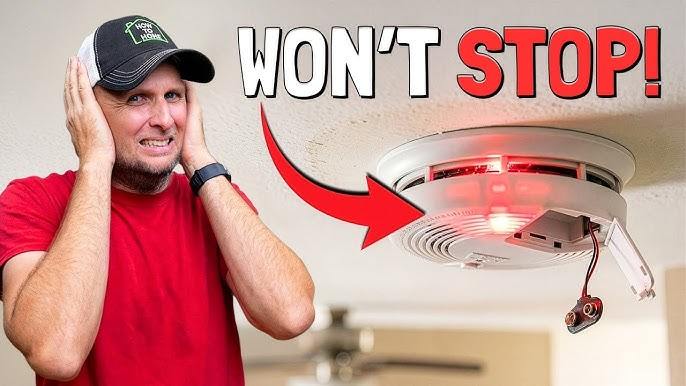
At 2:17 a.m., a homeowner climbs onto a chair for the third time that week, convinced the new battery they installed should have solved the problem. Yet every 30 or 60 seconds, the same sharp chirp echoes through the hallway. The battery is fresh. The smoke alarm chirping still works during tests. So why won’t the noise stop?
This frustrating situation is more common than many people realize. According to fire safety organizations and leading smoke alarm manufacturers, a battery is only one of several reasons an alarm may beep intermittently. In many cases, the issue involves dust buildup, sensor contamination, electrical faults, aging components, or a reset procedure that was never completed.
Understanding the real cause of alarm chirping can save hours of frustration and help ensure your home’s fire protection system remains reliable. Rather than removing the battery or disconnecting the alarm, it is worth identifying exactly what the chirp is trying to tell you.
Why Smoke Alarm Chirping Continues After a Battery Change

Many homeowners assume every chirp means a dead battery. While that is often true, modern alarms use multiple warning signals to communicate different problems.
How Smoke Alarms Use Chirps as Diagnostic Warnings
Smoke alarms are designed to monitor their own health. A chirp is essentially a maintenance alert rather than an emergency warning.
Unlike a full alarm sound, which is loud and continuous, a chirp usually occurs at regular intervals. Manufacturers use these patterns to indicate issues such as:
- Low battery power
- Sensor contamination
- Electrical interruptions
- Internal malfunctions
- End-of-life notifications
- Communication errors in interconnected systems
For example, some alarms chirp every 30 seconds for a low battery warning, while others chirp every minute when the sensor chamber requires cleaning.
Why a New Battery Does Not Always Solve the Problem
Installing a new battery addresses only one possible cause. If the detector has another fault, the chirp remains.
A common example involves alarms that store low-battery status in temporary memory. Even after a fresh battery is inserted, the unit may continue warning until it is reset correctly.
Some homeowners replace the battery several times before discovering the actual problem lies elsewhere. Understanding this distinction is the first step toward effective troubleshooting.
Chirping After Battery Replacement Due to Installation Errors

Battery-related mistakes remain one of the most frequent causes of persistent warning sounds.
Incorrect Battery Orientation
Even experienced homeowners occasionally install batteries incorrectly.
Most alarms require exact alignment of positive and negative terminals. If the battery is reversed, the unit may receive insufficient power or none at all.
Signs of incorrect installation include:
- Continued chirping immediately after replacement
- Failure during test mode
- Blank display screens on digital units
Always verify polarity markings inside the battery compartment before closing the drawer.
Using the Wrong Battery Type
Not all batteries perform equally inside smoke detectors.
Manufacturers often specify:
- 9-volt alkaline batteries
- AA alkaline batteries
- Lithium backup batteries
- Sealed lithium power packs
Using rechargeable batteries can create voltage inconsistencies. Some rechargeable cells deliver lower voltage than the alarm expects, triggering warning signals even when fully charged.
Check the manufacturer’s instructions before installing replacement batteries.
Smoke Alarm Chirping Caused by Battery Drawer and Contact Problems

A fresh battery cannot function correctly if it does not establish a reliable electrical connection.
Loose Battery Compartments
Over time, battery doors may loosen due to repeated opening and closing.
Many smoke alarms contain a safety mechanism that prevents operation unless the compartment closes completely. Even a small gap can trigger warning chirps.
Inspect:
- Battery door alignment
- Locking tabs
- Hinges
- Plastic clips
A damaged compartment often requires replacement of the entire detector.
Corroded Battery Contacts
Battery leakage can leave corrosion on metal terminals.
This residue interferes with electrical conductivity and prevents consistent power delivery.
Look for:
- White powdery buildup
- Green corrosion
- Rust-colored deposits
If corrosion is minor, gently clean contacts using a cotton swab and electronic contact cleaner. Severe damage usually means the detector should be replaced.
Smoke Alarm Chirping Linked to Residual Low-Battery Memory

Many people are surprised to learn that some alarms must be reset manually after battery replacement.
Why Stored Warnings Remain Active
Certain detectors contain capacitors that store residual electrical energy.
When a battery weakens, the system records a low-power condition. Installing a new battery does not always erase that status immediately.
As a result, the unit continues producing warning chirps despite receiving adequate power.
This form of smoke alarm chirping often leads homeowners to believe their new battery is defective.
How to Properly Reset the Alarm
Most manufacturers recommend a simple reset procedure:
- Remove the battery.
- Disconnect power if the unit is hardwired.
- Press and hold the test button for 15–30 seconds.
- Reconnect power.
- Reinstall the battery.
- Test the alarm.
This process discharges stored electricity and allows the system to restart with updated power readings.
Smoke Alarm Chirping Due to Dust and Dirt Accumulation

Dust is one of the most overlooked causes of false warning signals.
How Dust Affects Sensor Performance
Smoke detectors rely on sensitive sensing chambers.
Small particles can enter through ventilation slots and interfere with internal monitoring systems. Dust accumulation may cause:
- False alarms
- Sensor errors
- Reduced sensitivity
- Maintenance chirps
Research from major manufacturers indicates that detectors installed near kitchens, garages, workshops, or HVAC vents accumulate contamination faster than those in cleaner environments.
Cleaning the Alarm Safely
Routine cleaning is an essential part of smoke detector maintenance.
A simple cleaning process includes:
- Removing the detector from its mounting bracket
- Using compressed air around vents
- Vacuuming exterior openings
- Wiping accessible surfaces
Avoid using water or chemical cleaners inside the sensing chamber.
Most experts recommend cleaning smoke alarms at least every six months.
Smoke Alarm Chirping Triggered by Sensor Chamber Issues

Even clean alarms can develop internal sensor problems over time.
Aging Sensors and Reduced Accuracy
Smoke detectors do not last forever.
The National Fire Protection Association (NFPA) recommends replacing most smoke alarms every 10 years. As sensors age, they become less reliable and may begin generating warning chirps.
Typical symptoms include:
- Random chirping
- Reduced sensitivity
- Frequent nuisance alarms
- Intermittent operation
Manufacturers often include automatic end-of-life reminders specifically because aging sensors become less dependable.
Physical Damage Inside the Chamber
Tiny insects can sometimes enter detector openings.
Spider webs, insect debris, and accumulated contamination may disrupt the sensor’s operation.
Homes located near wooded areas or warm climates tend to experience these issues more frequently.
If cleaning does not resolve the problem, replacement is usually the safest solution.
Smoke Alarm Chirping in Hardwired Systems

Hardwired smoke alarms introduce additional components that can create warning sounds.
Backup Battery Problems in Hardwired Units
Many homeowners mistakenly assume a hardwired smoke alarm cannot experience battery issues.
In reality, most hardwired systems include backup batteries designed to maintain operation during power outages.
If the backup battery:
- Is weak
- Is disconnected
- Is installed incorrectly
- Has reached expiration
the alarm may continue producing chirps.
Even newly installed batteries can cause problems if they are incompatible with the manufacturer’s specifications.
Power Interruptions and Wiring Issues
Electrical fluctuations may also trigger warnings.
Examples include:
- Circuit breaker trips
- Loose wire connections
- Temporary outages
- Voltage instability
A hardwired smoke alarm continuously monitors incoming power. If interruptions occur, the unit may respond with a recurring maintenance signal.
When multiple alarms chirp simultaneously, electrical issues become a strong possibility.
Smoke Alarm Chirping as an End-of-Life Warning

Many homeowners replace batteries repeatedly without realizing the detector itself has reached the end of its service life.
Modern smoke alarms are designed with finite sensor lifespans. Over time, internal components degrade due to exposure to dust, humidity, airborne particles, and normal aging. To prevent homeowners from relying on unreliable protection, manufacturers program detectors to issue replacement reminders.
How Long Smoke Alarms Typically Last
The National Fire Protection Association and most major manufacturers recommend replacing smoke alarms every 10 years.
Key lifespan guidelines include:
- Standard smoke alarms: 10 years
- Combination smoke and carbon monoxide alarms: 7–10 years
- Sealed lithium battery models: 10 years
You can usually find the manufacturing date printed on the back of the detector.
For example, if an alarm was manufactured in March 2016, replacement should occur by March 2026 regardless of battery condition.
One of the most common causes of persistent smoke alarm chirping is simply an expired detector that has entered its replacement-warning phase.
How to Identify an End-of-Life Alert
End-of-life chirps often differ from low-battery warnings.
Common signs include:
- Chirping continues after multiple battery replacements
- Alarm passes power tests but keeps beeping
- Detector is more than 10 years old
- Manufacturer documentation references replacement alerts
Checking the manufacturing date often solves the mystery in less than a minute.
Smoke Alarm Chirping in Interconnected Alarm Systems

Many newer homes contain interconnected alarms. These systems improve safety because all detectors sound when one unit detects smoke.
However, interconnected designs can make troubleshooting more complicated.
One Faulty Unit Can Affect Multiple Alarms
In interconnected systems, one malfunctioning detector may trigger warning signals across the network.
For example:
- One expired alarm
- One loose battery
- One contaminated sensor
can cause chirping behavior that appears to originate from another location.
Homeowners often replace batteries in the wrong detector because the sound seems to travel through hallways and ceilings.
If you have several interconnected units, inspect each detector individually.
A single faulty device may be responsible for the entire problem.
How to Diagnose Interconnected System Problems
Start by identifying:
- Detector age
- Battery status
- Visible contamination
- Error indicator lights
Test alarms one at a time.
Many manufacturers include diagnostic LEDs that flash specific patterns to identify the affected unit.
If one detector consistently reports an error while others operate normally, replacing that unit often resolves the issue.
Smoke Alarm Chirping Patterns Vary by Manufacturer

Not every alarm communicates problems the same way.
Manufacturers use different beep sequences, flash patterns, and timing intervals to indicate specific conditions.
Common Chirp Patterns and Their Meanings
Although models differ, several warning patterns appear frequently:
| Chirp Pattern | Possible Meaning |
| Every 30–60 seconds | Low battery |
| Every minute after replacement | Reset required |
| Three chirps periodically | Sensor fault |
| Five chirps periodically | End-of-life warning |
| Continuous intermittent chirps | Power interruption |
Always consult the user manual for your specific model before making assumptions.
A pattern that indicates battery failure on one detector may indicate sensor contamination on another.
Why Reading the Manual Saves Time
Many homeowners spend hours troubleshooting issues that manufacturers explain clearly in product documentation.
Manufacturer guides often include:
- Error code charts
- Flashlight explanations
- Reset procedures
- Maintenance schedules
- Replacement recommendations
Before purchasing new parts or replacing the entire detector, verify what the chirp pattern actually means.
What to Do Next If Your Smoke Alarm Keeps Chirping

If the source of the problem remains unclear, work through the following process systematically.
Step 1: Verify Battery Orientation
Remove the battery and reinstall it carefully.
Check:
- Positive terminal placement
- Negative terminal placement
- Battery compartment closure
Even a small installation mistake can trigger warning sounds.
Step 2: Confirm Battery Freshness
A new battery is not always a good battery.
Look for:
- Expiration dates
- Package damage
- Leakage
- Incorrect battery type
Use high-quality batteries recommended by the manufacturer.
Step 3: Perform a Full Reset
Remove power completely.
Then:
- Remove the battery.
- Disconnect AC power if hardwired.
- Hold the test button for 20–30 seconds.
- Restore power.
- Reinstall the battery.
- Test the detector.
This procedure resolves many cases of lingering warning signals.
Step 4: Clean the Detector Thoroughly
Dust and debris frequently cause warning chirps.
Use:
- Compressed air
- Soft vacuum attachments
- Dry microfiber cloths
Pay special attention to ventilation openings.
Step 5: Inspect the Manufacturing Date
Turn the detector over and locate the manufacturing label.
If the unit is approaching or exceeding 10 years of age, replacement is usually the safest option.
Step 6: Check Every Detector in the Home
Interconnected systems can mislead homeowners.
Inspect:
- Hallway alarms
- Bedroom alarms
- Basement units
- Garage detectors
One problematic detector may affect the entire network.
Step 7: Examine Electrical Connections
For hardwired systems:
- Check breaker status
- Inspect visible wiring
- Verify connector seating
Electrical interruptions often create warning signals that resemble battery issues.
Step 8: Replace the Detector if Necessary
If all troubleshooting steps fail, replacement may be the most practical solution.
Compared with the value of reliable fire protection, a new detector is a relatively small investment.
Frequently Asked Questions
Why does my smoke alarm chirp every 30 seconds after a battery replacement?
The battery may be installed incorrectly, the detector may require a reset, or another issue such as contamination or aging sensors may be present.
Can a new battery still cause chirping?
Yes. Incorrect installation, incompatible battery types, or defective batteries can all trigger warnings.
How do I reset a smoke alarm after changing the battery?
Remove power completely, hold the test button for 20–30 seconds, reconnect power, reinstall the battery, and test the alarm.
Why is my hardwired smoke alarm chirping detector beeping?
Hardwired units often chirp because of backup battery problems, electrical interruptions, wiring faults, or end-of-life alerts.
How long do smoke alarms last?
Most manufacturers recommend replacement every 10 years from the manufacturing date.
Can dust really make a smoke alarm chirping detector beep?
Yes. Dust accumulation inside sensing chambers can interfere with operation and trigger maintenance warnings.
Why does only one detector chirp in an interconnected system?
The affected unit may have a low battery, sensor problem, contamination issue, or expiration warning even though other alarms are functioning normally.
Should I remove the battery to stop the chirping?
No. Removing power eliminates protection against fire and addresses only the symptom rather than the underlying cause.
What is the difference between a chirp and a full alarm?
A chirp is usually a maintenance warning. A full alarm is a continuous emergency alert indicating smoke or another hazardous condition.
When should I replace a smoke alarm instead of repairing it?
If the detector is more than 10 years old, has recurring faults, or continues chirping after troubleshooting, replacement is generally recommended.
Conclusion
Persistent warning sounds can be frustrating, especially after installing what appears to be a perfectly good battery. Yet batteries represent only one piece of a larger system. Installation mistakes, dirty sensors, electrical interruptions, humidity, aging components, interconnected network issues, and manufacturer-specific alerts can all create recurring warnings.
The most effective approach is systematic troubleshooting. Check the battery, perform a full reset, clean the detector, inspect the manufacturing date, and evaluate every alarm connected to the system. In many cases, the solution is simpler than homeowners expect.
Understanding the real causes of smoke alarm chirping helps ensure your detector remains dependable when it matters most. A few minutes spent diagnosing the warning today can help maintain reliable fire protection for years to come.


Leave a Reply