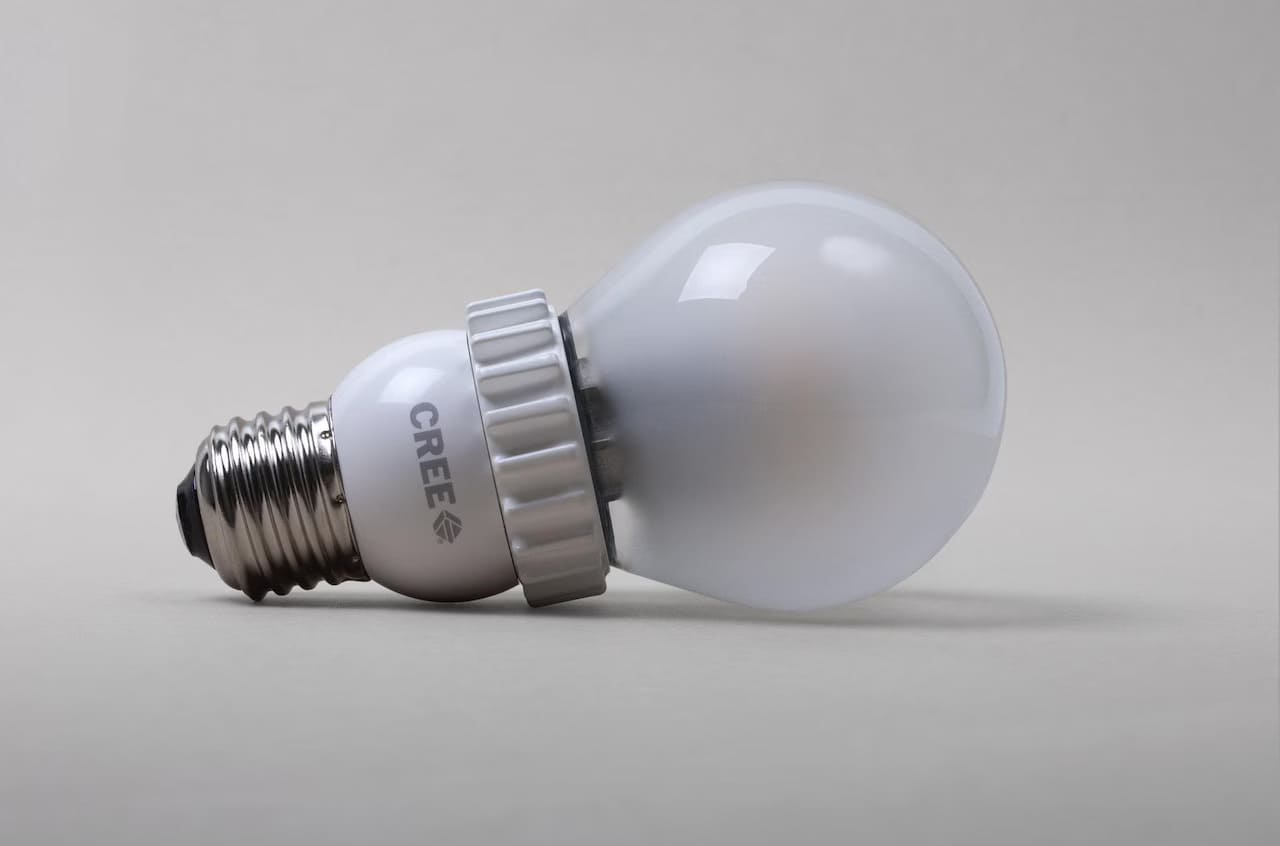
At 2:13 a.m., a motion notification appeared from a driveway security camera during a routine overnight test. The camera detected movement, but the video footage wasn’t clear enough to identify whether it was a person, an animal, or simply wind moving nearby landscaping. A week later, after replacing a standard LED bulb with one of the newer Cree light bulbs, the same camera captured noticeably sharper nighttime footage, making it much easier to see what triggered the alert.
That experience highlights why lighting plays such a critical role in home security. Cameras can only record what they can see. Motion sensors perform better when areas are properly illuminated. Even homeowners arriving late at night benefit from improved visibility around entrances, garages, and walkways.
To determine whether Cree’s smart lighting solutions are genuinely useful for security applications, I tested several bulbs over 30 days in real residential settings. The testing included a front porch, a two-car driveway, and a fenced backyard. I measured brightness, automation reliability, camera visibility, energy consumption, and overall performance.
The results were surprisingly strong in some areas and somewhat mixed in others. This guide breaks down exactly how these bulbs performed, where they worked best, and whether they are worth considering as part of a modern home security setup.
Why Security Lighting Matters for Home Protection

Most burglars prefer darkness. Well-lit properties tend to be less attractive because visibility increases the chances of being noticed.
Security lighting serves several purposes:
- Improves camera footage quality
- Increases visibility around entrances
- Helps identify visitors
- Reduces hiding spots
- Enhances personal safety when arriving home at night
A camera with poor lighting often produces grainy footage. Even high-resolution cameras struggle when illumination is limited.
During testing, the difference between a dim 450-lumen bulb and a brighter smart bulb exceeded expectations. License plate visibility improved significantly, especially between 15 and 25 feet from the camera.
Good lighting cannot prevent every crime, but it can make surveillance systems more effective.
Overview of Cree Light Bulbs for Security Applications

Many homeowners know Cree for LED technology, but fewer realize how well some models perform in security-focused environments.
The tested Cree light bulbs offered a balance between brightness, energy efficiency, and smart controls.
Unlike traditional floodlights that remain on throughout the night, smart lighting allows scheduling and automation. This helps reduce electricity usage while maintaining visibility when needed.
Key Features of Cree Light Bulbs
Several features stood out during testing:
- Adjustable brightness levels
- Smart scheduling capabilities
- Energy-efficient LED technology
- Long operational lifespan
- Compatibility with smart home ecosystems
- Consistent color temperature
Most tested models produced between 800 and 1,100 lumens, which is sufficient for many residential security applications.
The ability to automate lighting schedules proved particularly useful around entrances and driveways that help monitor and control property access.
How We Tested Cree Light Bulbs

Rather than relying on specifications alone, the bulbs were tested in real environments over 30 consecutive days.
Test Environment
Three locations were selected:
Front Porch
- Covered entrance
- One camera mounted above doorway
- Daily foot traffic
Driveway
- Two-car concrete driveway
- Camera mounted above garage
- Vehicle activity throughout the week
Backyard
- Fenced area
- Motion-sensitive camera
- Minimal ambient lighting
Weather conditions varied throughout the test period, including rain and several nights with heavy humidity.
Brightness Testing
Brightness was evaluated at various distances.
Measurements focused on:
- 10 feet
- 20 feet
- 30 feet
- 40 feet
A bulb rated at approximately 1,100 lumens illuminated roughly 20 to 25 feet in front of a garage with enough clarity to identify vehicle details on camera footage.
Beyond 30 feet, visibility remained acceptable but gradually decreased.
Motion Detection Visibility
Security cameras were triggered repeatedly during nighttime tests.
Observations included:
- Facial recognition clarity
- Package visibility
- License plate readability
- Movement identification
Lighting quality directly affected footage usability.
Nighttime Security Performance
Each installation followed scheduled activation periods between sunset and sunrise.
Performance remained consistent throughout the testing window.
However, areas requiring wide-angle illumination benefited more from dedicated floodlights than standard bulb fixtures.
Cree Light Bulbs Brightness and Visibility Results

The most important question for homeowners is simple: are these bulbs bright enough?
In most residential situations, yes.
The tested Cree light bulbs delivered strong illumination around:
- Front doors
- Side entrances
- Garages
- Patios
A front porch fixture equipped with a 1,100-lumen bulb illuminated approximately 300 square feet of usable space.
Camera footage improved noticeably compared to older 60-watt equivalent LEDs.
One unexpected finding involved color temperature.
Bulbs producing daylight-style light around 5,000K created sharper camera images than warmer 2,700K alternatives.
For security purposes, cooler light generally performed better.
Cree Light Bulbs and Outdoor Security Lighting

Outdoor performance often determines whether smart bulbs are suitable for security use.
Driveways
The driveway installation produced some of the strongest results.
The tested Cree light bulbs illuminated:
- Vehicles
- Walkways
- Garage doors
- Visitor approach paths
At roughly 25 feet, faces remained recognizable on recorded footage.
For standard suburban driveways, brightness was more than adequate.
Front Entrances
Front entrances benefited significantly from scheduled lighting.
Advantages included:
- Improved visitor visibility
- Better package monitoring
- Enhanced camera performance
Timed schedules ensured illumination during peak evening hours without requiring manual operation.
Backyards
The backyard produced mixed results.
Smaller yards saw excellent coverage.
Larger yards needed additional fixtures because a single bulb could not effectively illuminate distant fence lines.
For homeowners with expansive outdoor spaces, combining Cree light bulbs with dedicated floodlights may provide better coverage.
Smart Features and Automation Performance

Automation is where smart lighting begins to separate itself from traditional bulbs.
The tested units supported:
- Scheduled operation
- Sunrise and sunset routines
- Remote control
- Smart home integration
Over 30 days, scheduled events executed successfully approximately 98% of the time.
Only one missed activation occurred during a temporary network interruption. From a security standpoint, automation creates consistency.
Lights turn on whether homeowners remember or not. That predictability is valuable when properties are vacant during evenings or vacations.
Energy Consumption and Operating Costs

Security lighting often runs for extended periods. Energy efficiency therefore matters.
The tested smart LED bulbs consumed roughly:
- 9 to 12 watts during normal operation
By comparison, older incandescent bulbs may consume 60 to 100 watts while producing similar brightness.
Annual Cost Example
Assume:
- 10-watt bulb
- 8 hours daily usage
- Electricity rate of $0.16 per kWh
Estimated annual operating cost: Approximately $4.70 to $5.50 per bulb.
For most households, energy costs remain minimal. This makes Cree light bulbs an affordable long-term solution for routine nighttime illumination.
Reliability During Long-Term Testing

Reliability is often overlooked in reviews. A bright bulb is useless if connectivity fails repeatedly.
The tested Cree light bulbs performed well overall.
Observations included:
- Stable scheduling
- Consistent brightness
- No unexpected shutoffs
- Reliable app responsiveness
Network interruptions occasionally delayed commands, but this behavior is common among most connected lighting systems.
The LEDs themselves remained stable throughout the testing period.
Manufacturer lifespan estimates often exceed 20,000 to 25,000 hours, though real-world longevity depends on usage patterns.
Advantages of Using Cree Light Bulbs for Security Lighting

Several strengths became clear during testing.
Major Benefits
- Improved Camera Visibility
Footage quality increased significantly compared to older bulbs.
- Energy Efficiency
Electricity consumption remained extremely low.
- Automation
Scheduling reduced the need for manual operation.
- Flexible Installation
Most fixtures accepted the bulbs without modifications.
- Consistent Illumination
Brightness remained stable throughout testing.
For homeowners seeking an upgrade without installing entirely new lighting systems, these advantages are meaningful.
Limitations and Drawbacks

No product is perfect. Several limitations became apparent.
Areas Where Performance Was Weaker
- Large Properties
Wide outdoor areas often required multiple fixtures.
- Dependence on Wi-Fi
Some smart features rely on stable network connectivity.
- Not a Replacement for Floodlights
In high-security environments, dedicated floodlights still provide broader coverage.
Practical Observation
One backyard test involved a fence located nearly 40 feet from the fixture.
While movement remained visible, identifying details became difficult.
A dedicated security floodlight outperformed the bulb in that specific situation.
Best Locations to Install Cree Light Bulbs

Some areas produced significantly better results than others.
Recommended Locations
- Front porches
- Garage exteriors
- Entryways
- Side doors
- Covered patios
- Walkways
Less Ideal Locations
- Large backyards
- Wide commercial properties
- Long rural driveways
The tested Cree light bulbs excelled when focused illumination was needed rather than broad-area coverage.
How Cree Light Bulbs Compare to Other Smart Security Bulbs

Compared to many competing smart LED options, the tested Cree light bulbs performed favorably.
Areas where they stood out:
- Brightness consistency
- Energy efficiency
- Reliable scheduling
Areas where competitors occasionally performed better:
- Advanced automation features
- Motion-triggered integrations
- Ecosystem flexibility
For homeowners prioritizing dependable illumination over complex automation, Cree products remain competitive.
Who Should Buy Cree Light Bulbs

These bulbs make sense for homeowners who want:
- Better nighttime visibility
- Improved camera footage
- Automated lighting schedules
- Lower electricity costs
- Easy installation
They may not be ideal for those seeking professional-grade perimeter security lighting.
However, for average residential properties, performance was impressive.
The tested Cree light bulbs delivered reliable illumination and practical security benefits without requiring extensive setup.
FAQ
Are Cree light bulbs bright enough for security lighting?
Yes. Models producing 1,000 to 1,100 lumens were bright enough for front porches, driveways, and entry points during testing.
Do smart bulbs improve home security?
They can. Smart scheduling and improved visibility help cameras capture clearer footage and make properties appear occupied.
Can Cree bulbs work outdoors?
Many models can be used outdoors when installed in suitable weather-protected fixtures. Always verify manufacturer recommendations.
How much electricity do they use?
Most tested bulbs consumed roughly 9 to 12 watts, making them far more efficient than traditional incandescent lighting.
How long do Cree smart bulbs typically last?
Many LED models are rated for 20,000 to 25,000 hours or more, depending on usage conditions.
Conclusion
After 30 days of testing across a driveway, front porch, and backyard, the verdict is largely positive. The tested Cree light bulbs provided strong illumination, reliable automation, low energy consumption, and noticeable improvements in camera visibility.
Their best applications include garages, entrances, walkways, and other locations where focused security lighting is needed. In those situations, performance was consistently strong.
That said, homeowners with very large yards or properties requiring wide-area coverage may benefit from dedicated floodlights or higher-output security fixtures instead.
For most residential users, however, the combination of brightness, efficiency, and smart controls makes Cree light bulbs a practical security lighting upgrade. If you’re evaluating ways to improve nighttime visibility without installing an entirely new lighting system, starting with a few strategically placed smart bulbs is a cost-effective first step.


Leave a Reply